

👁 Views: 9,668
🌟 Proverb Guide: Waste Not, Want Not!
Welcome to a wonderful learning journey about wise words! Have you ever wondered how small actions can make a huge difference in your daily life? This magical waste not want not lesson helps young students speak better English while discovering how to protect our beautiful world!
Specifically, understanding ancient sayings teaches polite children to appreciate their toys, clothes, and yummy food. By exploring this article today at UCLnet.com, you will practice your reading skills and unlock amazing secrets about clever saving habits. Therefore, let us open this friendly guide and explore together right now!
1. What is the True Meaning of This Proverb?
Let us look closely at our main phrase: waste not want not. This classic saying teaches us that if we do not throw away good things today, we will always have exactly what we need in the future!
To understand this easily, a famous Persian poet named Saadi wrote a very sweet poem about this exact idea hundreds of years ago. He told his readers that being satisfied with what you have makes a person truly rich inside! For instance, here is a simple translation of his beautiful words:
“Being happy with little things makes a person strong and truly wealthy, while being greedy makes a traveler feel lost and empty.”
Consequently, people who remember this wisdom never run out of supplies. When you take care of your belongings, you never have to worry about missing them tomorrow.
2. Where Did This Wise Sayings Come From?
Every idiom has a history, just like an old treasure map! This special phrase was first printed in a book in the year 1772. However, a much older version was written down way back in 1576!
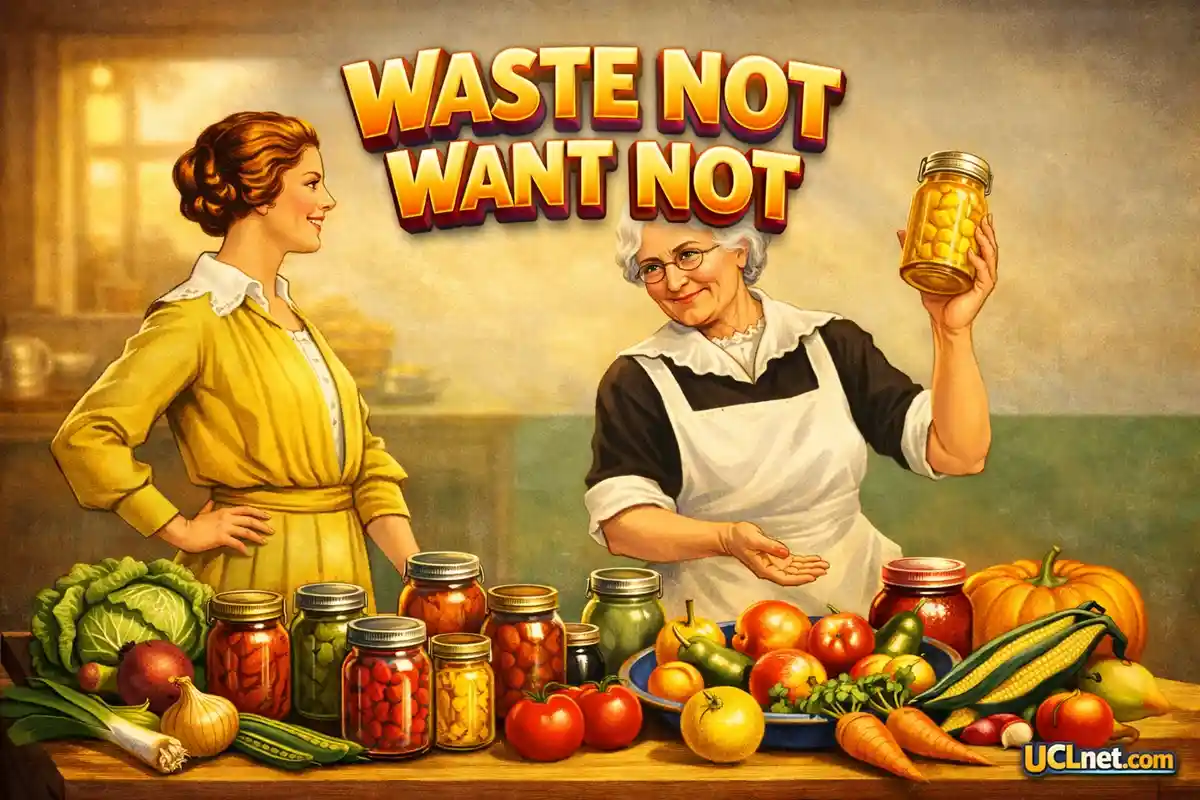
In the old days, grandma would say: “Willful waste makes woeful want!” This means that if you choose to throw away good materials on purpose, you might feel very sad and empty later. Moreover, grandmothers back then used to make quilts out of tiny scraps of old clothes to stay warm during freezing winters. As a result, this tradition became a smart way to live a happy and comfortable life.
3. Fun Examples and Everyday Practice
How can a young kid use this idea at home or at school? First of all, think about your lunchbox. Whenever you save your extra apples or crackers instead of throwing them into the trash can, you are practicing this exact lesson!
Let us look at these three colorful real-life examples together:
- The Craft Room: Try to save the colorful paper scraps left over from your drawing or painting projects; you can easily use them later to make a beautiful holiday card.
- The Kitchen Table: I never let my yummy leftovers spoil inside the refrigerator; instead, I always try to eat them on time.
- The Park: A grand nation that prides itself on smart thrift habits always helps the environment by turning old plastic bottles into cool new playground toys.
Instead of asking your parents to buy brand new things every single week, look around your bedroom. You might find a forgotten toy that is ready for a whole new game!
📚 Mini Dictionary
| Word | Simple Definition for Kids |
|---|---|
| Waste | To throw something useful away without using it properly. |
| Want | In this old proverb, it means a state of needing or lacking something. |
| Proverb | A short, wise saying that people repeat to give good advice. |
| Thrift | Being very careful and smart with your money and materials. |
| Leftovers | The extra food remaining after a yummy meal is finished. |
📝 Free Language Worksheet
Part A: Multiple Choice Questions
a) To wish for a pony b) To lack or need something c) To scream loudly
2. Who wrote a magnificent poem about saving and satisfaction long ago?
a) A modern pop star b) Saadi the Persian poet c) A friendly classroom captain
Part B: True or False Challenge
4. Throwing away good food is a clever way to practice thrift. (True / False)
Part C: Short Answer Question
6. How does saving your resources protect our beautiful green planet?
Part D: Fun Writing Practice
8. Copy this sentence with your best handwriting: “I can be smart and save my treasures every day!”
4. Keep Growing Your Vocabulary Collection
In conclusion, learning this special phrase shows us that small mindful actions lead to a very rich and stable life. Soon, we will share more fantastic stories and classic sayings in our upcoming reading guides!
Instead of memorizing long list patterns, you are expanding your vocabulary through historical wisdom. Likewise, keep adding new entries to your homework journal and share your thoughts with your buddies at school. Keep up the amazing work!
