👁 Views: 2,360
Teach Basic Concepts to Kids in English with Expert Tips
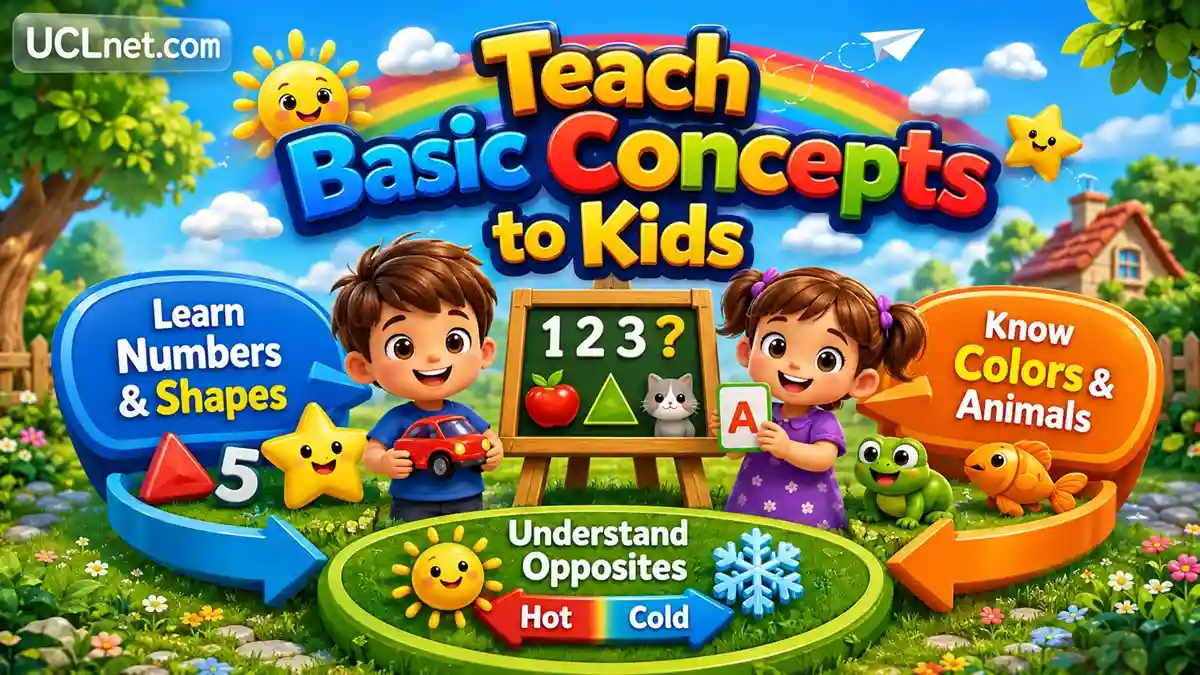
Helping young learners discover the world is a wonderful journey when you teach basic concepts to kids. Simple words and core ideas are all around us in daily life, such as bright colors, fun shapes, basic numbers, and nature. Therefore, by using easy and playful methods, mothers, fathers, and teachers can guide children successfully. This complete master guide serves as the foundational hub for our entire series, explaining how parents and kindergarten educators can teach kids aged 4 to 6 effectively at home and in the classroom.
Explore more stories and guides at Stories for Kids on UCLnet.com
Why Early Learning Matters When You Teach Basic Concepts to Kids
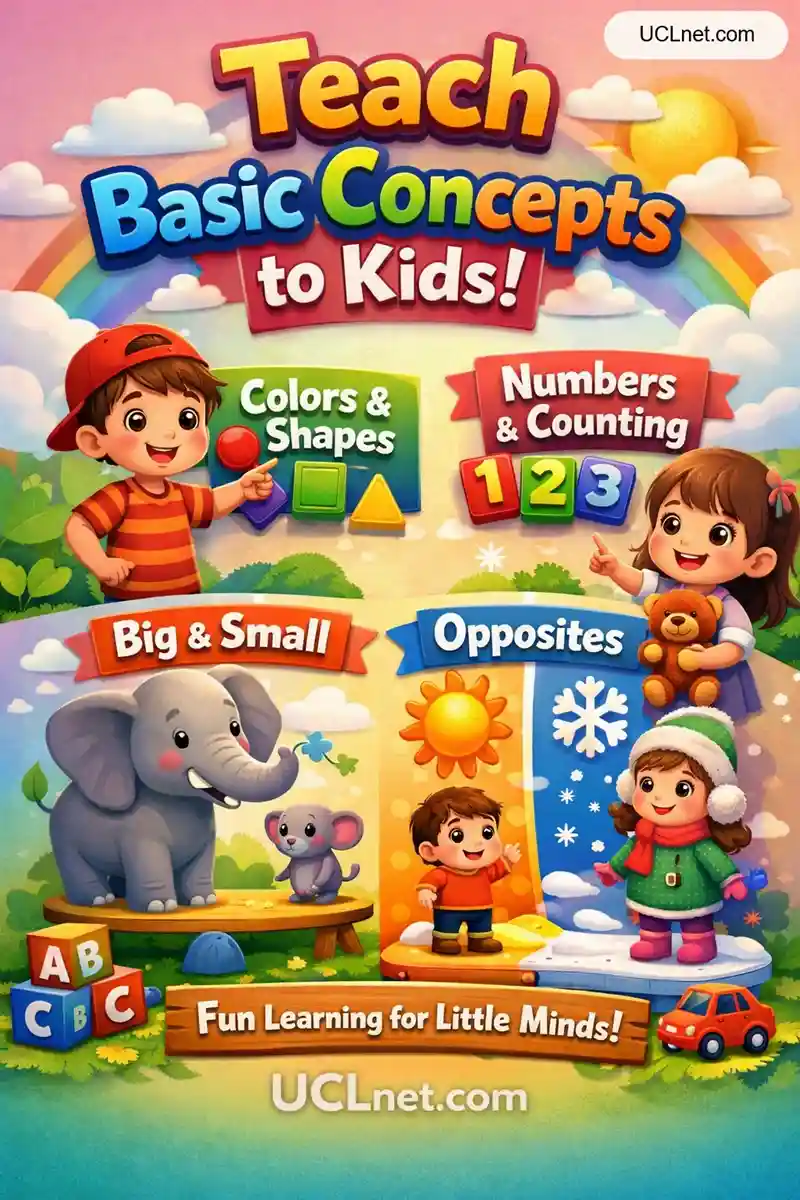
When you are teaching basic concepts to kids, you help their brains grow in a very healthy way. Early education is not only about memorizing words; it also helps children understand their environment, look closely at physical objects, speak with growing confidence, and remember important facts much longer. Furthermore, knowing basic terms helps kids name surrounding items correctly, which makes future reading and school tasks significantly easier for both beginners and advanced learners aged 4 to 6.
Comprehensive Master Guide to 20 Basic Concepts When You Teach Basic Concepts to Kids
As the mother post for this series, this extensive table outlines the twenty core foundational topics that parents and teachers will explore across our upcoming posts when they are teaching basic concepts to kids. Each item includes practical instructional goals designed specifically for young learners aged 3 to 8:
Thus, reviewing this comprehensive matrix helps parents and teachers structure upcoming lessons effectively when they teach basic concepts to kids.
Effective Home Strategies When You Teach Basic Concepts to Kids
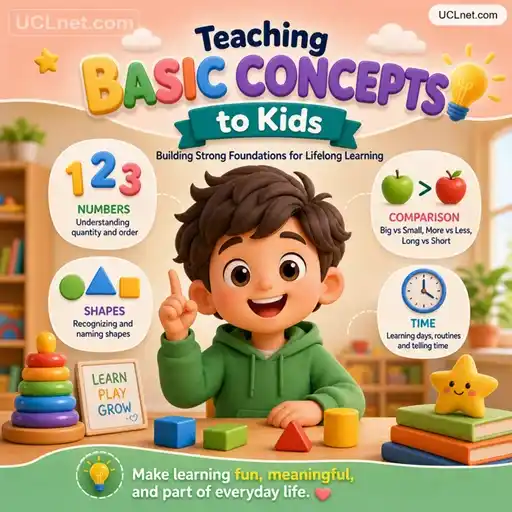
When you teach basic concepts to kids at home, doing a little bit every single day is much better than long, tiring lessons. For example, you can turn normal house chores into English practice sessions. While walking around the house, point to common items and ask your child to name their color or shape. You can also count snacks together during break time or read short picture books before sleep to help them remember new vocabulary easily.
Classroom Management Tips When You Teach Basic Concepts to Kids
Teachers and kindergarten instructors should plan engaging lessons that fit different learning speeds. When teachers want children to acquire new words in group settings, using interactive games, body movements, and simple chants creates a happy and welcoming environment for everyone. Additionally, group singing and collaborative drawing tasks help quiet children join in, build social skills, and feel completely confident as they teach basic concepts to kids.
Top Practical Activities When You Teach Basic Concepts to Kids
1. Finding Games: Ask children to walk around the room to find physical objects matching specific target colors or shapes.
2. Flashcard Games: Use picture cards for fast word recognition drills to improve memory speed.
3. Story Questions: Ask simple questions while reading an illustrated storybook together.
4. Musical Songs: Sing cheerful songs that include numbers, letters, and descriptive adjectives.
These interactive activities ensure that when educators teach basic concepts to kids, the process remains joyful and highly effective.
Short Reference Story When You Teach Basic Concepts to Kids
The Day of Discovery
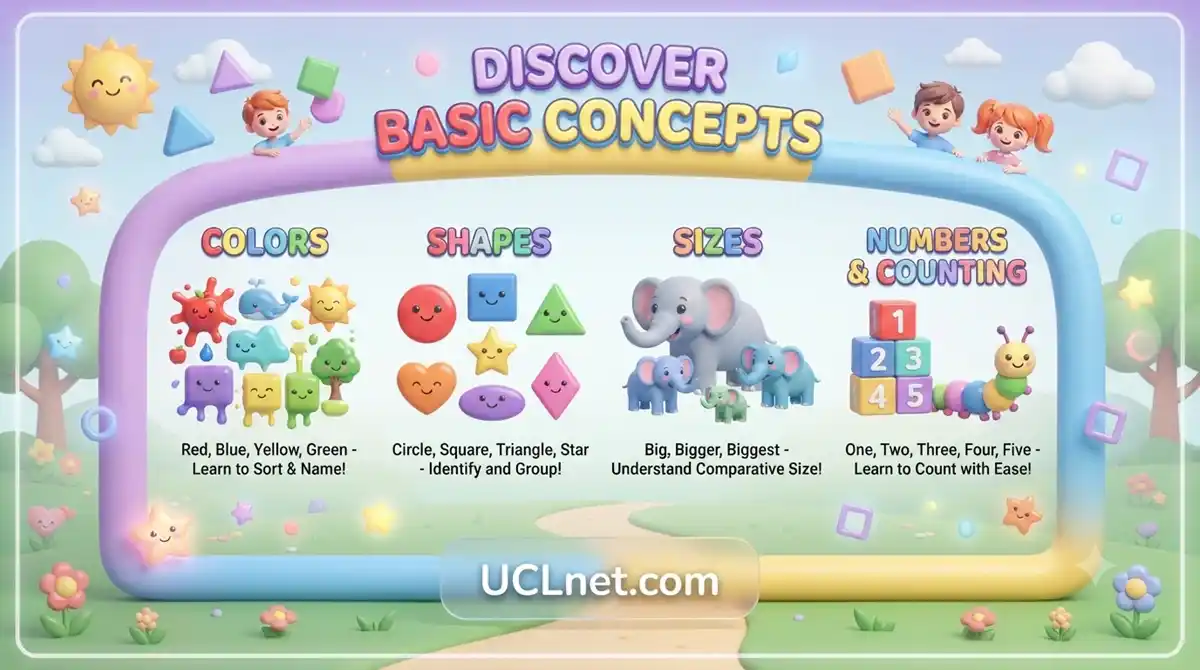
Mia wakes up in her cozy room and looks around carefully. As part of her daily journey to teach basic concepts to kids, our young character explores her surroundings. She spots a red ball, a square window, and three colorful books on her wooden shelf. When she counts them out loud, she smiles because learning new English words is just like playing a fun game. Every single day brings new happy adventures in vocabulary building!
Mini-Dictionary and Worksheets When You Teach Basic Concepts to Kids
In this mother post, we introduce parents and teachers to how upcoming mini-dictionaries and specialized worksheets will be presented in subsequent posts. These resources are designed to help adults explain difficult vocabulary easily when working with children aged 4 to 6 at home and in classrooms:
Reviewing this mini-dictionary framework helps teachers and parents understand how future worksheets and vocabulary lists will support them when they teach basic concepts to kids.
Frequently Asked Questions When You Teach Basic Concepts to Kids
How can parents keep children interested during lessons? Keep sessions short, fun, and game-based, mixing physical movement with clear vocabulary words.
Are these ideas good for formal classrooms? Yes, teachers can easily adapt these methods for group activities, games, and peer interaction.
Should learning feel like hard studying? Absolutely not. Early language acquisition works best when integrated naturally into daily fun and games.
Conclusion When You Teach Basic Concepts to Kids
Learning basic things should always feel like an exciting game instead of a hard homework task. By using simple conversations, fun games, great stories, and daily home routines together, children easily build strong English vocabulary while having a wonderful time. Therefore, parents and teachers can make a major positive difference in a child’s language journey through happy daily practice for teaching basic concepts to kids.