👁 Views: 2,275
Teach Colors to Kids in English with Fun Activities
Learning colors remains one of the most exciting milestones when you teach colors to kids. Furthermore, vibrant shades surround young learners everywhere in daily life—in toys, clothes, food, nature, and storytelling. Therefore, by using playful, structured, and immersive techniques, parents and educators can successfully guide young learners without turning lessons into a tedious chore. Consequently, this comprehensive guide provides deep pedagogical strategies, practical household examples, conversational prompts, and engaging routines tailored for both mothers, fathers, and kindergarten teachers.
Explore more stories and guides at Stories for Kids on UCLnet.
Why Early Color Recognition Matters When You Teach Colors to Kids
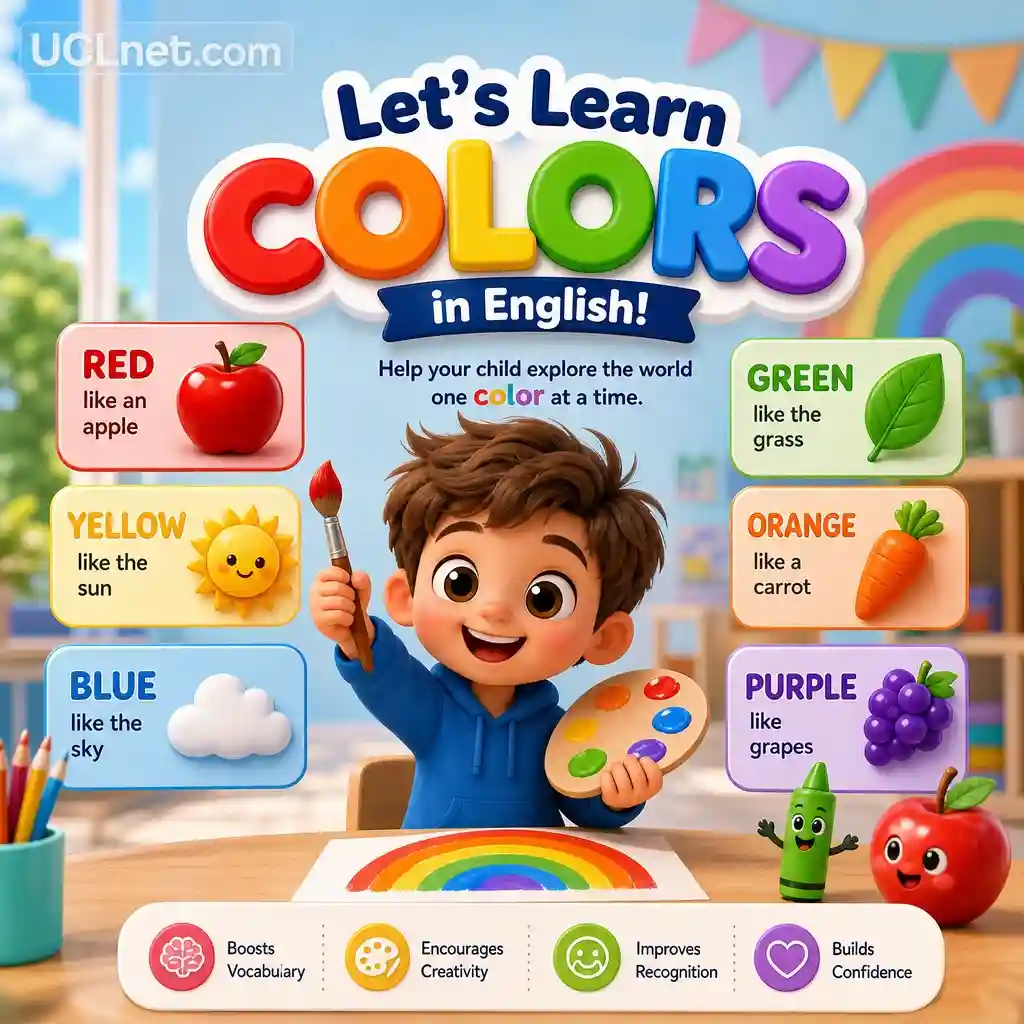
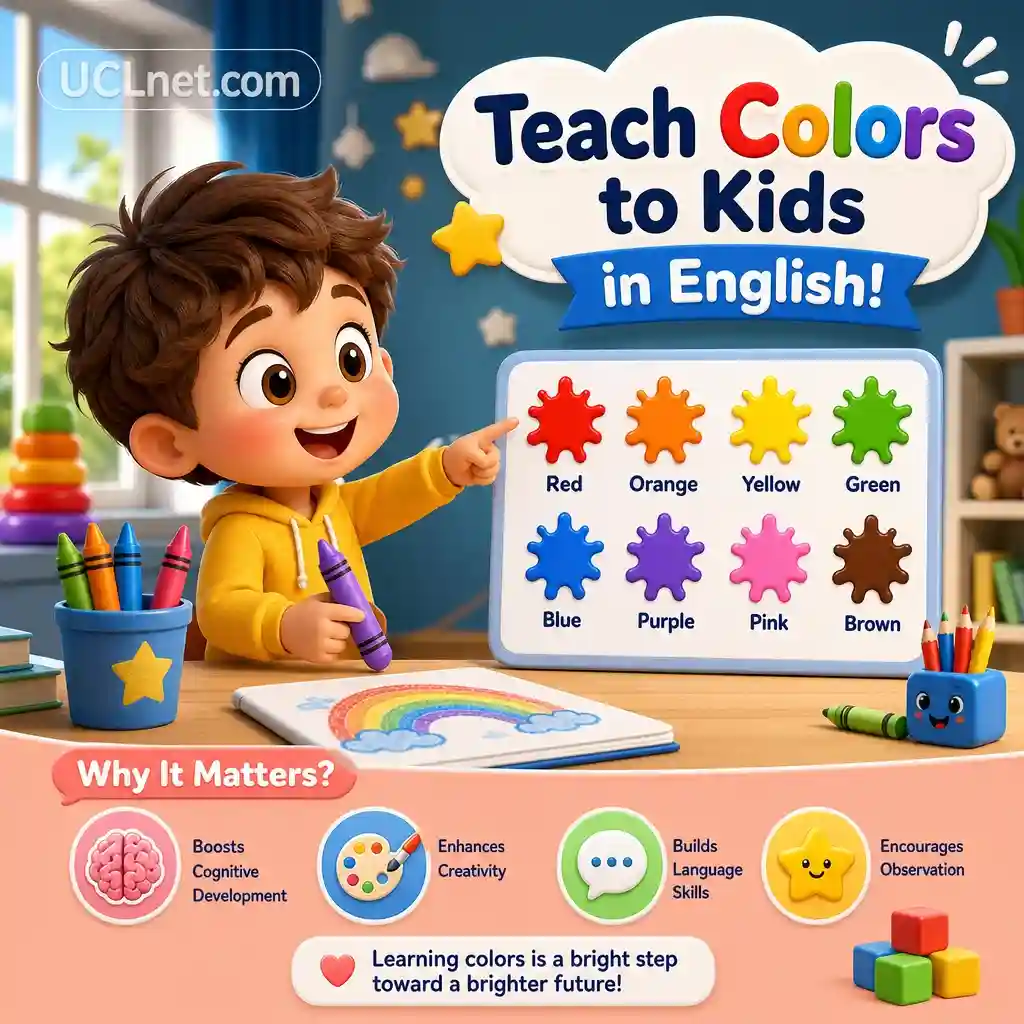
When you are teaching colors to kids, you unlock multiple cognitive developmental pathways. Specifically, color identification goes far beyond basic vocabulary acquisition; indeed, it serves as a foundational cognitive tool that helps children categorize their environment, sharpen fine visual observation skills, boost expressive speaking confidence, and strengthen memory retention. In addition, recognizing and naming shades accurately allows young learners to describe surrounding objects with precision, laying crucial linguistic groundwork for advanced reading comprehension, science classifications, and collaborative classroom tasks. As a result, integrating these descriptive terms into daily organic routines ensures that language acquisition feels completely natural rather than forced when you teach colors to kids.
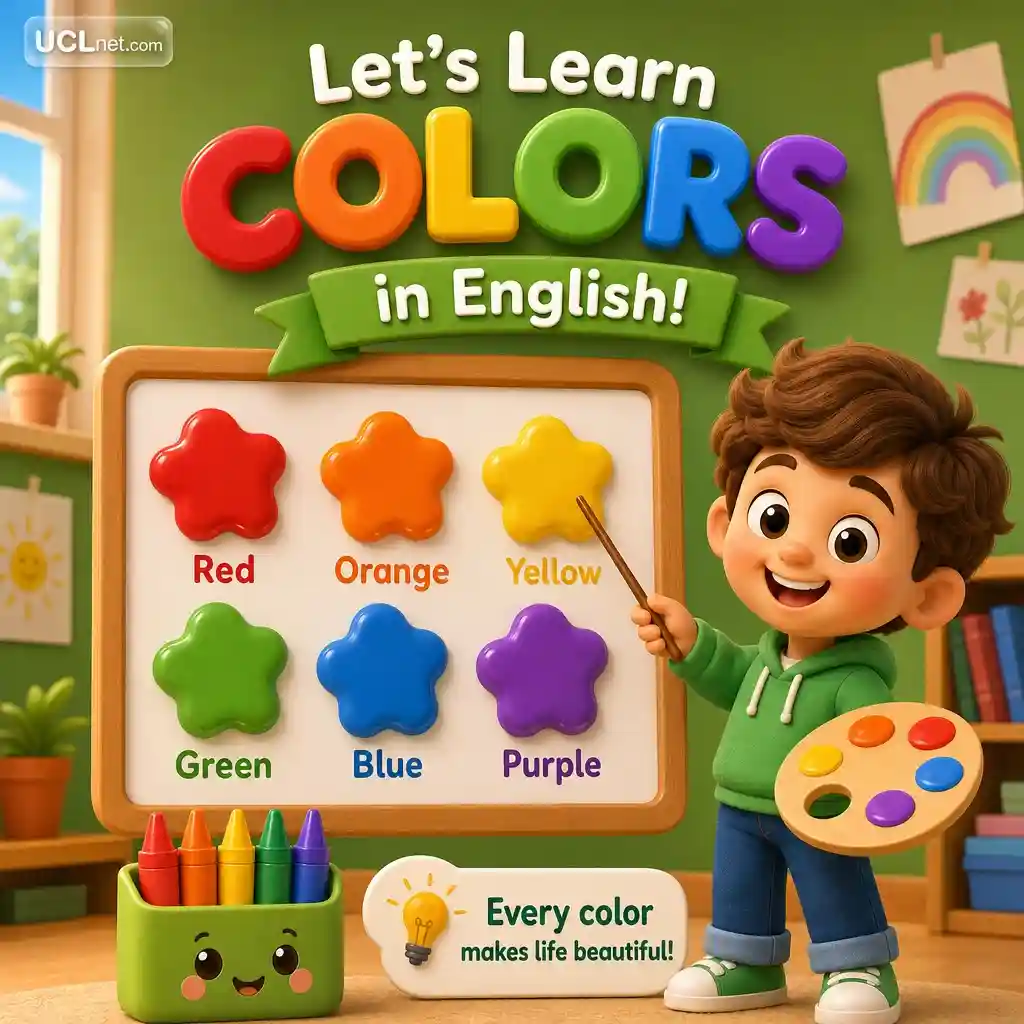
Essential Color Vocabulary Grid to Teach Colors to Kids
Thus, reviewing this organized grid daily helps cement memory when you teach colors to kids.
Simple Descriptive Sentences You Can Teach Colors to Kids
- The apple is red.
- The sky is blue.
- I like yellow flowers.
- The grass is green.
- My balloon is pink.
- The bear is brown.
- I have a black car.
- The snow is white.
Meanwhile, keep sentences short and natural to match preschool attention spans as you teach colors to kids.
Practical Guidance for Parents Who Teach Colors to Kids
When you teach colors to kids at home, consistency beats duration. For example, transform ordinary chores into immersive language opportunities. Furthermore, while grocery shopping, point to items and ask your child to identify their shades, or talk about food colors during family meals. Additionally, read colorful picture books together before bedtime, repeating key adjectives multiple times. Therefore, always offer enthusiastic verbal praise for every correct answer to reinforce intrinsic motivation and self-esteem. Remember that a few minutes of playful, focused engagement daily yields exponentially better outcomes than exhausting, long study marathons when you teach colors to kids.
Effective Kindergarten Teaching Strategies to Teach Colors to Kids
Classroom educators and kindergarten teachers should design multi-sensory lesson plans that accommodate different learning speeds. Consequently, when teachers want to establish solid vocabulary frameworks in group settings, incorporating peer collaboration, physical movement drills, and rhythmic chants creates an inclusive environment. Moreover, group songs and collaborative drawing tasks encourage shy learners to participate actively, bridging individual comprehension gaps through collective peer dynamics as they teach colors to kids.
Engaging Hands-On Activities When You Teach Colors to Kids
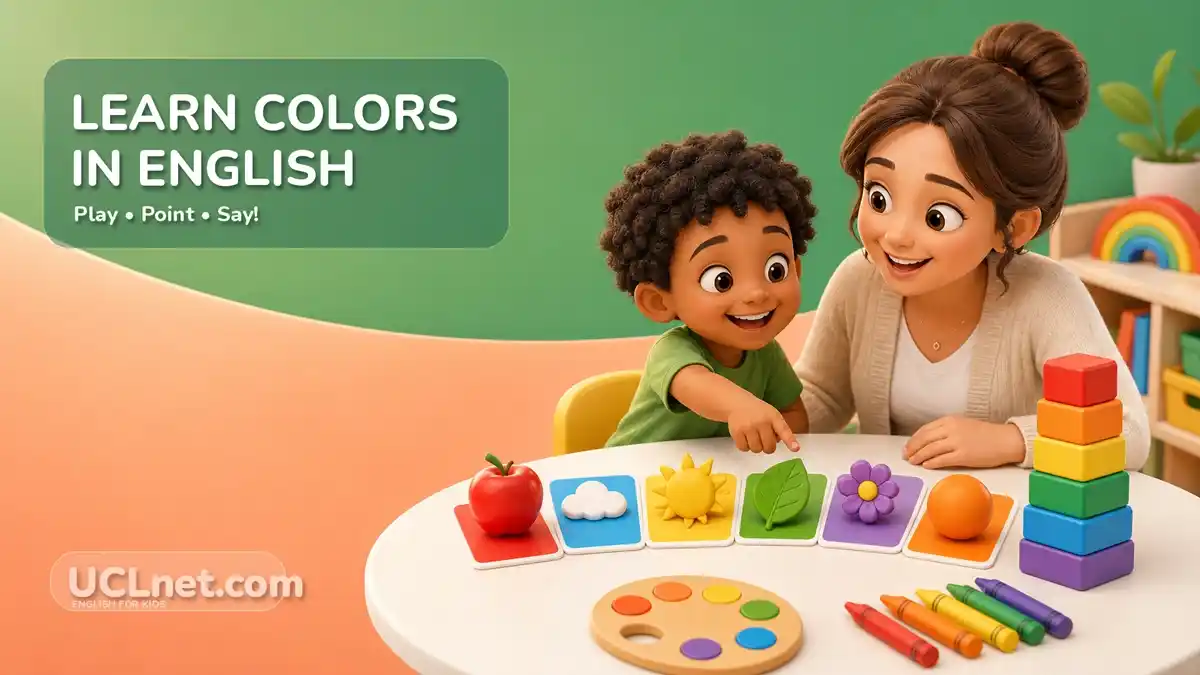
1. Color Hunt: Transform your living room or classroom into an explorer zone. Specifically, ask your child, “Can you find something blue?” Let them dash across the room to fetch a blue pillow or toy. Repeat with different target colors when you teach colors to kids.
2. Toy Sorting: Gather a mixed bin of building blocks or small play items. Direct kids to sort toys into separate color groups—red toys in one basket, green blocks in another, and blue items in a third. This hands-on task powerfully builds vocabulary and analytical categorization skills.
3. Color the Picture: Print a simple line-art coloring book page featuring animals or nature scenes. Give explicit verbal instructions such as, “Color the sun yellow, color the tree trunk brown, and color the apple red,” ensuring comprehension aligns with physical action.
4. Dress Up Game: Turn morning wardrobe selection into a linguistic game. Ask, “Can you wear something blue today?” Children love connecting abstract English vocabulary items directly to their real-life clothing choices.
5. Nature Walk: Step outside into a park or garden. Instruct children to look around and spot specific elements like green leaves, the blue sky, bright yellow flowers, and sturdy brown tree trunks.
Interactive Dialogue Games to Teach Colors to Kids
Interactive dialogue accelerates fluency. Therefore, use these guided conversational templates during playtime to build confidence when you teach colors to kids:
Dialogue Routine 1:
Parent: “What color is this?”
Child: “It’s red.”
Parent: “Do you like red?”
Child: “Yes, I do!”
Dialogue Routine 2:
Parent: “What color is your shirt today?”
Child: “It’s blue.”
Parent: “Fantastic choice! Blue looks wonderful on you.”
Practicing these mini-exchanges daily empowers kids to respond automatically and transition from single-word naming to full expressive sentence patterns.
Short Story for Practice While You Teach Colors to Kids
A Colorful Day
Emma wakes up and gets ready for a fun morning outside. As part of her daily journey for teaching colors to kids, our character explores her surroundings. Emma has a red ball that bounces across the yard. She wears a cheerful yellow hat to keep the sun away. Looking up into the open sky, she sees a tiny blue bird flying past. She glances down at the ground; the grass is lush and green. Walking further down the garden path, she finds a delicate purple flower hiding near the fence. Emma smiles brightly because she realizes that wonderful colors are everywhere around her!
Musical Learning Through Songs for Teaching Colors to Kids
🎵 Red, red, what do you see?
I see a red apple looking at me.
Blue, blue, what do you see?
I see the blue sky above me. 🎵
Children absorb phonetic rhythms and vocabulary much faster through musical repetition. Sing these lines together while pointing directly at matching classroom or household objects.
Fast-Paced Review Techniques
Point rapidly to different objects around the room and ask children, “What color is it?” Challenge them to provide the correct answer within a strict three-second window. This fast-paced repetition style effectively trains the brain for instant vocabulary recall under playful pressure.
Printable Resources and Toolkits
Parents and teachers can easily prepare custom learning toolkits. Essential printable assets include color flashcards, matching worksheets, themed coloring sheets, color bingo grids, memory match cards, picture sorting templates, and interactive cut-and-paste activity sheets.
📝 Interactive Worksheet of Teaching Colors to Kids
Dear parents and teachers, you can use these sample questions to ask your child and practice color concepts together during fun interactive sessions:
Click here to view Answer Key
Question 1: a) Blue
Question 2: a) Yellow
Question 3: True
Question 4: False
Question 5: apple
Question 6: cat
Question 7: flamingo
Question 8: Brown
Question 9: True
Question 10: True
Frequently Asked Questions When You Teach Colors to Kids
At what age should children learn colors? Most children begin recognizing basic colors between ages two and four, while preschoolers aged four to five are fully ready to confidently name and use them in simple English sentences.
How many colors should I teach at one time? Start small with three to five core colors, then gradually introduce additional hues as your child or student becomes completely comfortable.
Should I teach colors using flashcards only? Absolutely not. Children learn best when they see, hear, say, and physically interact with color words across diverse everyday situations.
Conclusion to Teach Colors to Kids Successfully
Learning colors should always feel like an exciting game rather than a stressful study task. By weaving simple conversational prompts, interactive games, engaging mini-stories, rhythmic songs, and daily household routines together, children naturally build robust English vocabulary while having fun. Therefore, parents and educators do not require complicated lectures—just a few minutes of meaningful, joyful practice each day can create a lifetime difference in a child’s language journey when you teach colors to kids.
🚀 Master All Basic Concepts!
Unlock the ultimate roadmap to teach 20 essential skills to young learners. Don’t miss out on complete guides and expert strategies!