👁 Views: 2,269
Teaching Spatial Positions to Kids: Fun Activities for Parents and Teachers
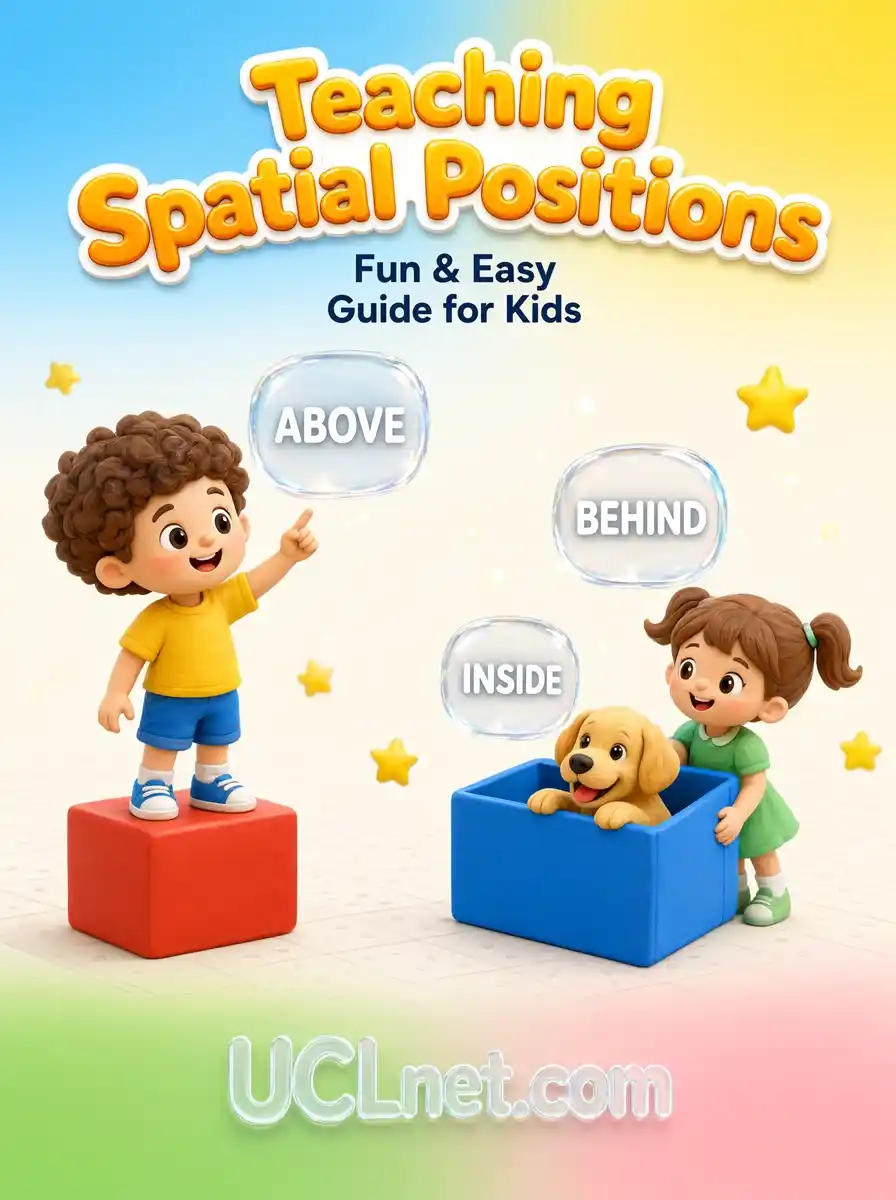
Helping young learners discover positional language is an exciting journey when you focus on Teaching Spatial Positions to Kids. Understanding where objects and people are located forms an absolute foundation of early spatial awareness and cognitive development. Therefore, by using easy and playful methods, mothers, fathers, and teachers can guide children successfully. This comprehensive guide serves as our sixth core topic, explaining how parents and kindergarten educators can teach positional concepts effectively at home and in the classroom.
Explore more stories and guides at Stories for Kids on UCLnet.com
Why Positional Awareness Matters for Young Learners
When you focus on Teaching Spatial Positions to Kids, you help children connect directional words to physical environments around them. Early learning is not only about memorizing vocabulary; it also helps kids build listening comprehension, improve directional fluency, and understand physical relations. Furthermore, mastering basic prepositions makes future school tasks significantly easier for beginners aged 4 to 6.
Essential Positional Concepts Focus Guide
This simple table shows the main spatial preposition groups that parents and teachers can practice step by step with young children:
Looking at this chart helps moms, dads, and teachers plan fun daily lessons easily.
Effective Home Strategies for Positional Learning
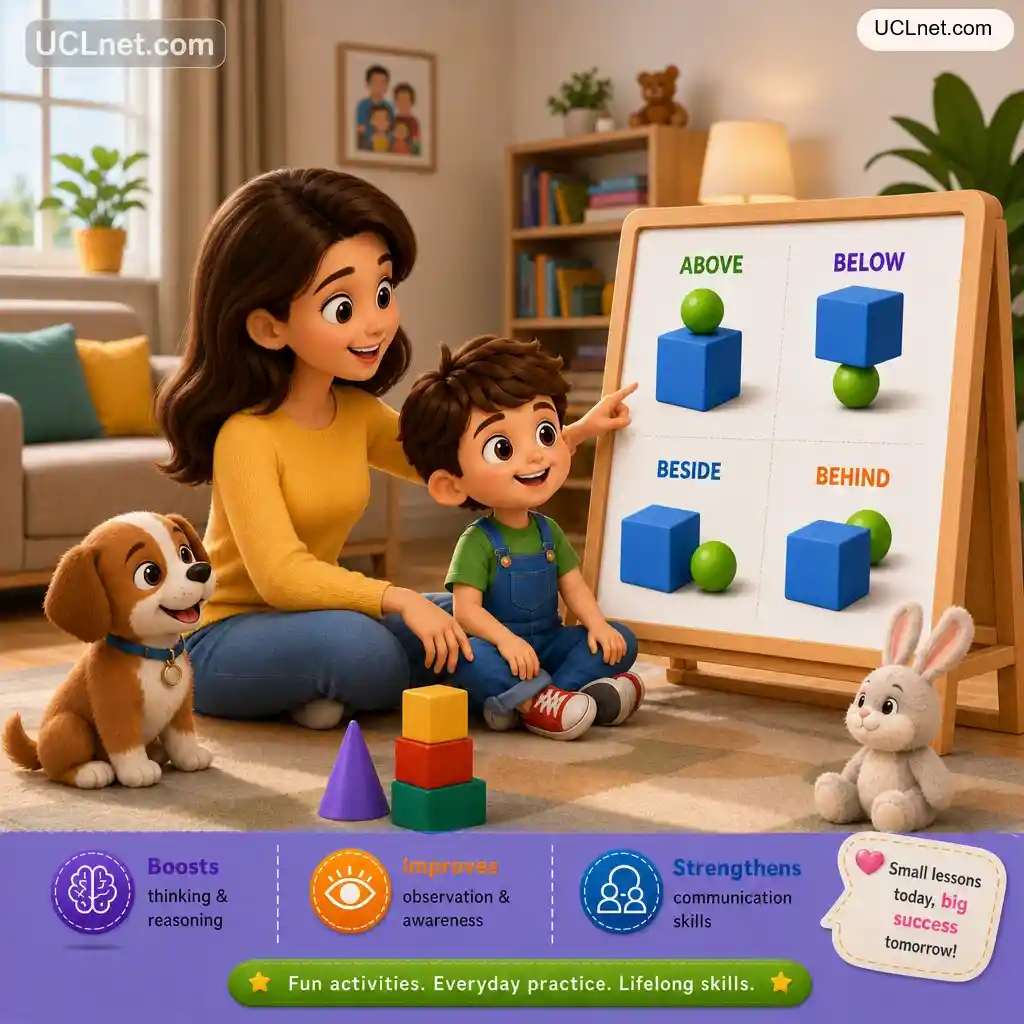
When you practice Teaching Spatial Positions to Kids at home, interactive daily routines work best. For example, you can ask your child to place their teddy bear on the bed or put their shoes under the chair. Using household furniture and toys turns learning into a joyful game instead of hard work.
Classroom Tips for Positional Activities
Kindergarten teachers can use physical action commands and interactive games during group sessions. When educators incorporate body movements and preposition songs, shy children feel confident to join in. Creating a warm and friendly group space brings great success when focusing on Teaching Spatial Positions to Kids in school.
Top Practical Positional Activities
1. Obstacle Course: Guide children to crawl under a table and step over cushions.
2. Hide and Seek Toy: Hide a small toy in a box or on a shelf and give directional clues.
3. Simon Says Movement: Play Simon Says using commands like jumping up and crouching down.
4. Flashcard Placement: Match position cards to correct visual spots in the room.
These fun activities make learning position concepts very easy for young kids.
Short Spatial Story for Kids
The Curious Puppy’s Adventure
Max the puppy loves exploring! Every morning during his practice with Teaching Spatial Positions to Kids, he jumps up onto the soft sofa and crawls under the wooden table. He finds his red ball hiding in a basket and his chew toy sitting right on the rug. By understanding every direction, Max navigates his home with a happy wagging tail.
Mini-Dictionary for Spatial Concepts
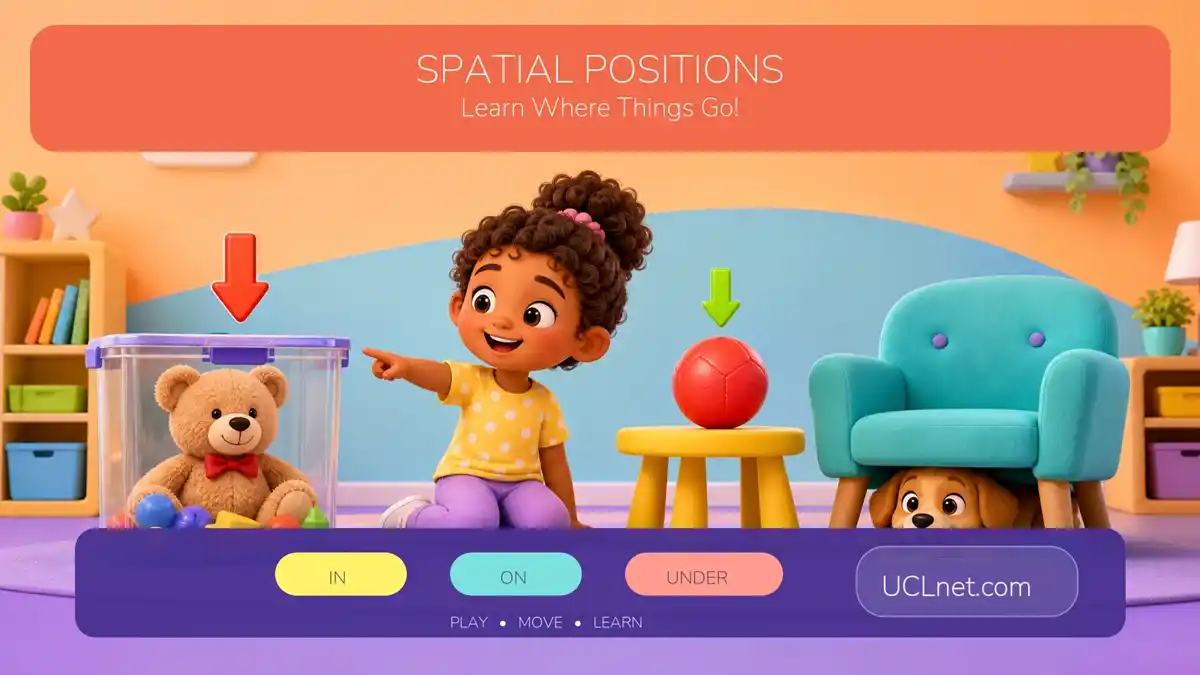
This simple list helps parents and teachers understand easy learning words:
This mini-dictionary makes it easy for adults to guide children during lessons.
Frequently Asked Questions
When should kids start learning position words? Children aged 3 to 6 are at an ideal age to start understanding in, on, under, up, and down.
Can parents teach prepositions without special equipment? Yes, daily objects around the house make home learning very straightforward and effective.
How long should practice take each day? Ten to fifteen minutes daily is perfect to keep young children focused and excited.
Conclusion
Learning positional concepts builds a strong bridge to clear communication. By combining interactive games, short stories, and easy daily practice, adults can turn preposition learning into a wonderful experience. Happy daily routines bring amazing progress for every child!
🚀 Master All Basic Concepts!
Unlock the ultimate roadmap to teach 20 essential skills to young learners. Don’t miss out on complete guides and expert strategies!