👁 Views: 3,240
Waist vs Waste: Meaning, Differences & Fun Quiz for Kids
What Is the Difference Between Waist and Waste?
Have you ever noticed how two words can sound identical when spoken out loud while meaning completely separate things in English writing? Naturally, when young students write stories or complete school assignments, they frequently encounter confusing homophones like waist vs waste that create spelling puzzles. Although these terms share the exact same pronunciation (/weɪst/), they perform totally different jobs in everyday communication. Caring teachers and supportive parents always look for straightforward methods to guide children through tricky vocabulary without feeling overwhelmed. Therefore, this comprehensive guide provides clear definitions, smart memory tricks, practical examples, and an interactive quiz to make learning effortless. Consequently, mastering these spelling differences empowers every child to write and speak with complete confidence. Furthermore, exploring these language nuances early on helps students build a solid foundation for learning English vocabulary.
Specifically, knowing how to choose the right spelling stops you from mixing up the middle section of your body with throwing away leftover food!
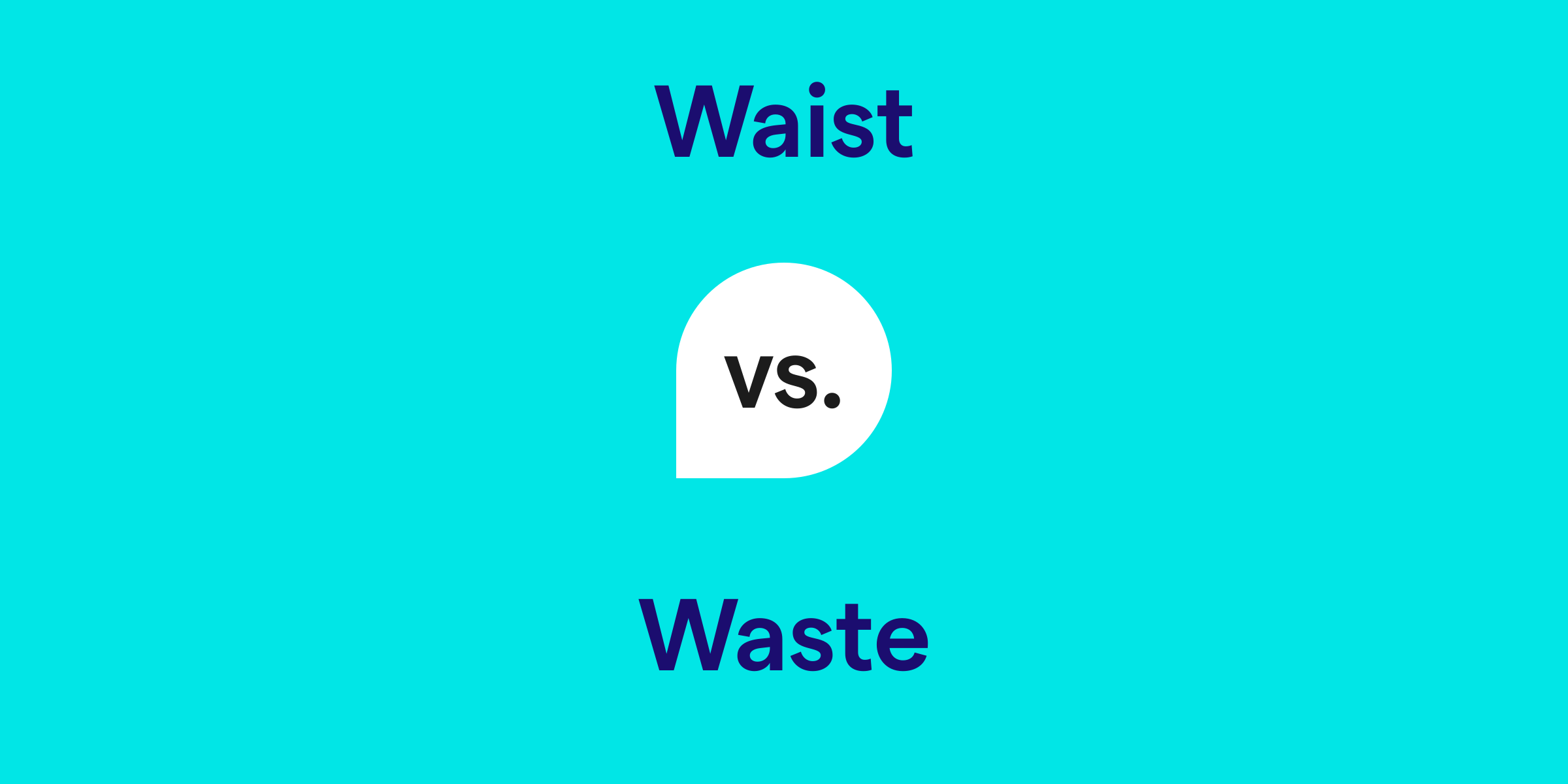 Spelling trick for waist vs waste – UCLnet.com
Deep Dive Into Waist Meaning and Body Parts
First of all, let us examine our first term. What is a waist? Spelled with an ‘i’ in the middle, it functions as a noun representing the middle part of the human body located between the ribs and the hips. Additionally, it refers to the narrow middle band of clothing items like trousers, skirts, or belts. Therefore, understanding this body noun helps students describe physical features and clothing sizes accurately. Furthermore, here are two key ways to understand its usage:
1. Body Section Noun
Meaning: The middle part of the human torso between the ribcage and hips.
Example: Accordingly, measure your waist to find your correct belt size.
2. Clothing Waistband Section
Meaning: The narrow section of pants or skirts that fits around the body.
Example: Similarly, the elastic waist on these trousers feels very comfortable.
Exploring Waste Meaning and Uses
Meanwhile, let us explore our second grammar term. What is waste? Spelled with an ‘e’ at the end, it functions as a noun, verb, or adjective. As a noun, it refers to trash or unwanted materials. As a verb, it means to use or spend something carelessly without a good purpose, such as wasting time or food. Therefore, waste serves as an essential word for discussing conservation and recycling. Consequently, learning this word helps young writers express responsible habits. Moreover, practicing these action verbs daily expands vocabulary confidence.
1. Trash and Garbage (Noun)
Meaning: Discarded or unwanted material that is thrown away.
Example: Specifically, please remember to recycle your household waste.
2. Careless Spending (Verb)
Meaning: To spend or use time, money, or food without a good purpose.
Example: Likewise, do not waste your precious time worrying about small things.
Quick Comparison: Waist vs. Waste
In short, to make these concepts crystal clear before taking our practice quiz, review this quick summary chart:
| Word | Grammar Role | Example Sentence |
|---|---|---|
| Waist | Noun (middle part of the body). | He wore a belt around his waist. |
| Waste | Noun (trash) or Verb (careless use). | Do not waste water while brushing. |
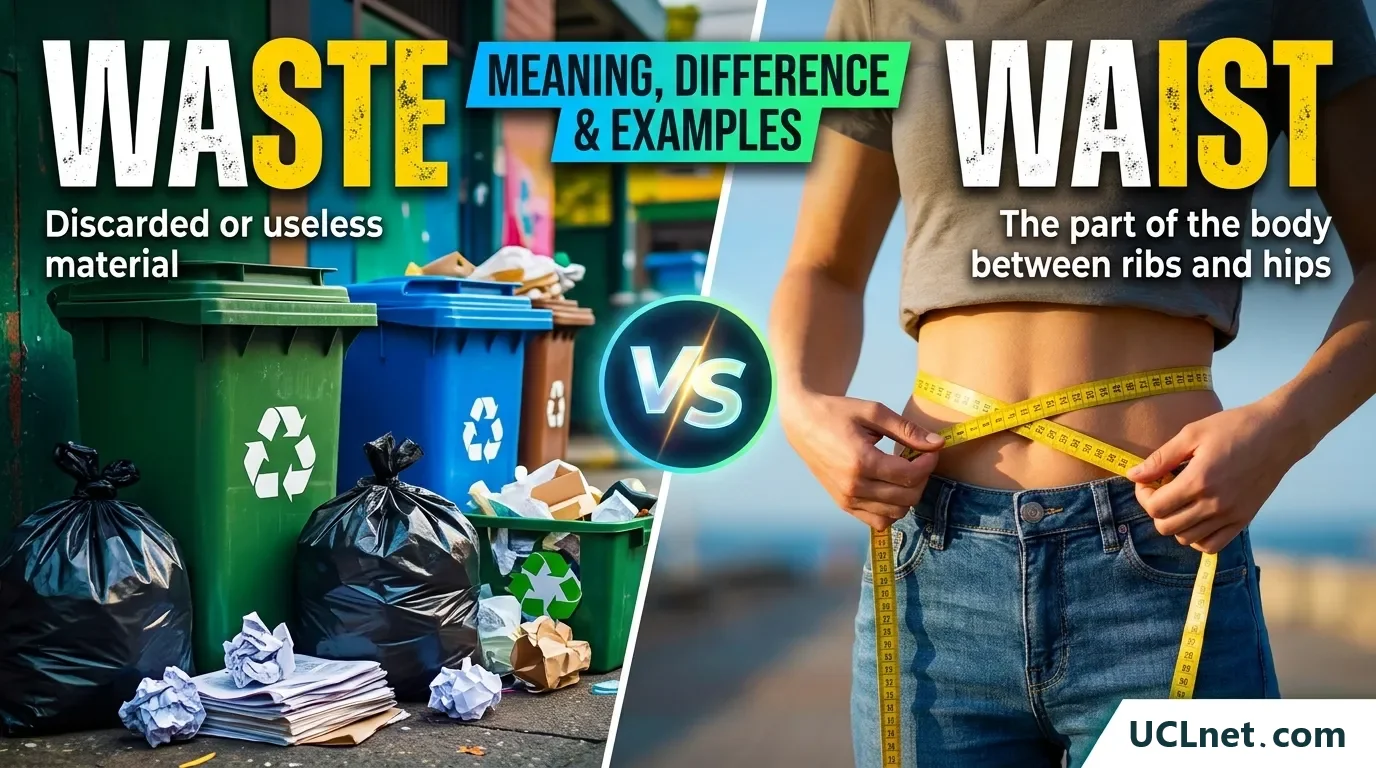 Difference between waist and waste for young learners – UCLnet.com
Teacher & Parent Guidance & Memory Tricks
Furthermore, parents and classroom teachers can use these smart tips during study time:
- Middle Letter Trick: Notice that w-a-i-s-t has an ‘i’ in the middle, just like your waist is right in the middle of your body.
- Ending Letter Trick: Think of w-a-s-t-e as having an ‘e’ for expending or emptying out trash.
- Real-Life Error Correction: Students frequently write: “Do not waist food at dinner.” This sentence is incorrect because your body part is waist; the verb for throwing away carelessly is waste.
Easy Everyday Dialogues for Kids
In addition to memorizing spelling rules, reading short dialogues aloud helps kids speak natural English. Try practicing these conversations with friends:
Dialogue 1:
Tailor: “Let us measure your waist to get the perfect pants fit.”
Child: “Thank you, these jeans fit comfortably around my waist now!”
Dialogue 2:
Mom: “Please turn off the faucet while brushing your teeth.”
Child: “Okay mom, I will not waste any water!”
Mini Dictionary for Young Learners
Before taking the interactive quiz below, please review these key vocabulary terms pulled directly from our lesson text:
| Word | Simple Meaning | Example Sentence |
|---|---|---|
| Torso | The main part of the human body excluding the head and limbs. | He wore a jacket that covered his upper torso. |
| Recycle | To convert waste material into reusable material. | We separate paper and plastic so we can recycle them. |
| Extravagantly | In a way that lacks restraint or spends excessively. | He spent his allowance extravagantly on toys. |
| Homophone | Words having the same pronunciation but different spellings. | Waist and waste are famous English homophones. |
Practice Quiz: Waist vs. Waste
Therefore, check your understanding of waist vs waste by trying these ten practice questions:
Click here to show Answer Key
1. The middle part of the body between ribcage and hips
2. True
3. Recycle
4. waist
5. True
6. Please remember to recycle your household waste.
7. Torso
8. To prevent spelling errors and build writing confidence
9. waste
10. It has an ‘i’ in the middle like the middle of your body
Explore More Related Categories
Want to discover more English vocabulary lessons and confusing words? If so, explore our related categories below: