👁 Views: 2,323
🌟 Out of the Blue Meaning for Kids: Learn Colorful English Expressions!
🌟 Understanding the Idiom: Out of the Blue
Welcome to your favorite place for learning English, UCLnet.com! Have you ever had a wonderful surprise happen when you least expected it? For instance, maybe a friend arrived unexpectedly, or a toy appeared right when you needed it. In English, speakers describe this special kind of surprise with a magical phrase: out of the blue. Today, we are going to explore this expression together, learn how it works, and practice using it in our daily adventures. Consequently, learning out of the blue meaning for kids helps young children describe exciting surprises with complete confidence. Therefore, get ready for an amazing journey into the world of English color idioms with UCLnet.com!
For example: “A friendly butterfly flew into our garden out of the blue, surprising everyone!” 🦋✨

🌱 What Does Out of the Blue Mean?
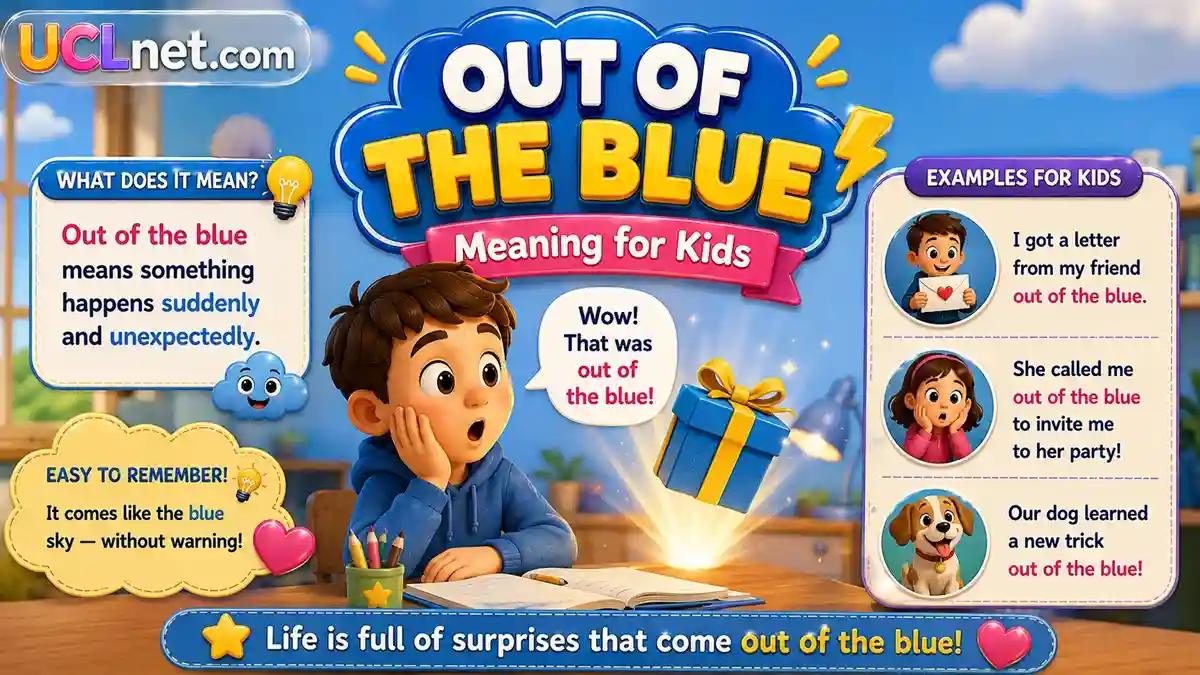
To begin with, when someone asks you what the phrase means, you can tell them it is like magic! Imagine sitting in your room quietly, and suddenly, a colorful balloon floats past your window. Naturally, you were not expecting it, and it appeared from nowhere. That is exactly when native speakers say something happened out of the blue. Furthermore, it helps us describe things that are sudden and unexpected. For young learners, mastering out of the blue meaning for kids helps you tell better stories about your life. Instead of saying “it was a surprise,” you can say “it happened out of the blue.” As a result, your English sounds much more natural and fun!
📖 A Story About Unexpected Fun
First, Leo was playing with his blocks in the living room. Everything was quiet and calm. Then, out of the blue, his puppy, Buddy, jumped into the room with a brand new ball! In fact, Leo had not seen the ball before, and he was so happy to see his puppy excited.
Leo said, “Buddy, you appeared out of the blue!” His mother smiled and explained that this expression is perfect for moments like this. Consequently, stories like Leo’s help us remember that English is not just about words; it is about describing special moments in our day. By using out of the blue meaning for kids, children become more confident in expressing themselves clearly.
🎯 Examples of the Phrase in Conversations
To become an expert at using this idiom, let us look at how we can use it in different sentences:
• To start with, my best friend called me out of the blue just to say she missed me.
• In addition, it started snowing in the middle of spring out of the blue!
• Furthermore, a delicious snack appeared on the table out of the blue after I finished my homework.
• Finally, the song started playing out of the blue while we were dancing.
Practice these examples with your parents or teachers. Each time you use out of the blue meaning for kids, you will feel a little more comfortable with your growing English skills.
📜 Historical Roots: Why Blue?
You might wonder, why do we use the color blue? Long ago, sailors would look at the clear blue sky and enjoy the calm weather. However, if a storm suddenly appeared, the change felt very fast because there were no clouds anywhere in the sky. To the sailors, the storm seemed to come straight from the clear blue space above. People liked this way of describing surprises, so they started using it to talk about anything that happens suddenly. Today, sharing this history helps you remember out of the blue meaning for kids easily. In fact, it shows that English language learners are also explorers of history and stories!
📚 Mini-Dictionary for Young Explorers
Here are simple definitions of key words used inside this lesson:
| Word | Simple Meaning |
|---|---|
| Idiom | A special phrase that means something different than its individual words. |
| Unexpected | Something that happens without you knowing it would happen. |
| Suddenly | Happening very quickly or fast. |
| Adventure | An exciting experience or journey. |
| Express | To share your thoughts or feelings clearly. |
📝 Fun Quiz for Kids
Test your knowledge with this interactive worksheet! Choose the correct answer for each question below.
Click here for Answer Key
1. It happens suddenly and is unexpected
2. His puppy jumping in with a new ball
3. False
4. Because of the color of the sky
5. Happening very quickly
6. True
7. An exciting experience
8. It was a surprise
9. True
10. Practice them with parents and friends
📚 Explore Our Main Color Idioms Collection
Want to discover our complete collection of colorful English expressions? Check out our master guide:
📚 Explore More Related Lessons!
Want to practice more English lessons? Consequently, check out our special categories: