👁 Views: 300
Classroom Actions – Word by Word Pages 6 & 7
|
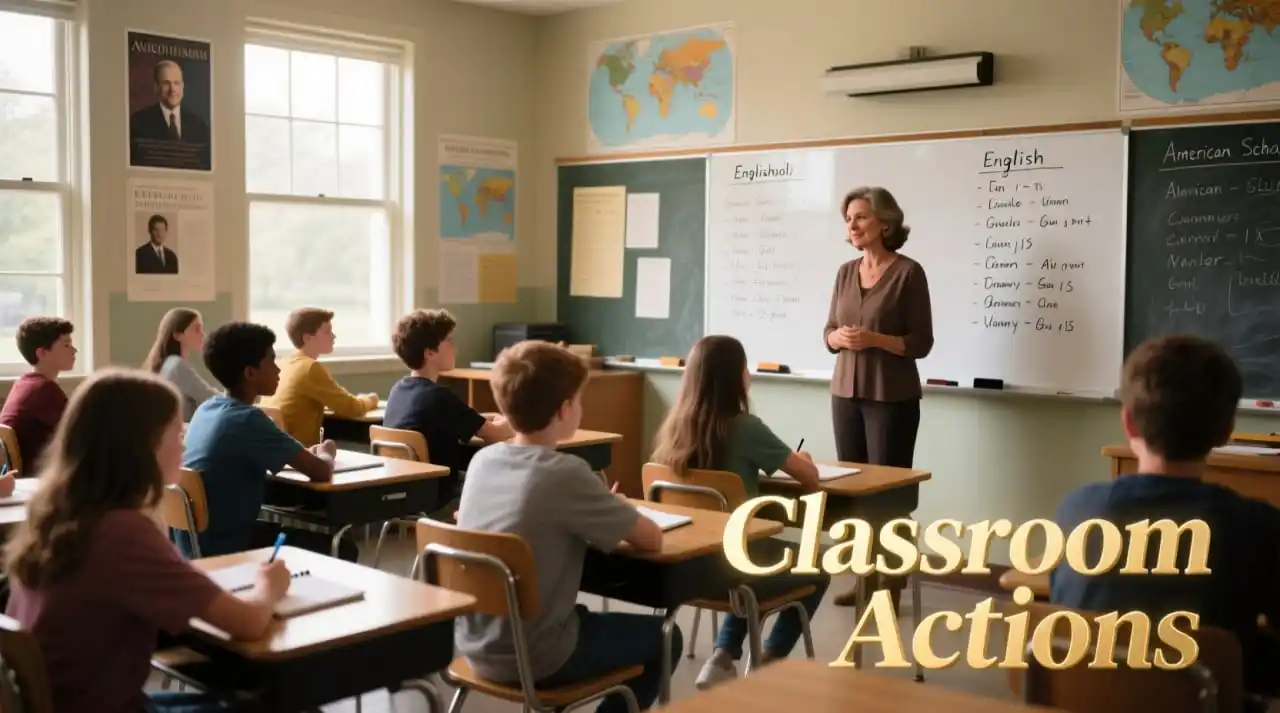
Pages 6 and 7 of the Word by Word textbook introduce young English learners to essential classroom actions—a practical set of 30 everyday instructions used in English-speaking classrooms. Mastering these phrases helps students understand teachers, participate actively, and feel confident in English-language learning environments. Unlike traditional vocabulary lists, these expressions are action-oriented and immediately useful. They bridge the gap between listening comprehension and real-time classroom interaction—making them a cornerstone of beginner English education. |
Why Classroom Actions MatterMany learners understand grammar and vocabulary in isolation but struggle when teachers provide verbal instructions, such as “Turn in your assignments” or “Raise your hand.” This gap occurs because classroom language relies heavily on imperatives (command forms) and common phrasal verbs that aren’t always taught in early lessons. The Word by Word approach solves this by embedding these commands in visual, contextual learning. Pages 6–7 don’t just list words—they simulate a real classroom, preparing students for authentic interaction from the very first day. |
Complete List of Classroom Actions (Pages 6–7)Below is the full list of 30 classroom instructions from the textbook, presented clearly for study and practice:
|
Teaching Tips for Parents & EducatorsTo help children internalize these commands:
|
Key Language Notes1. Imperative Form: All sentences use the base verb form (e.g., “Open,” “Write”)—this is how instructions are given in English. 2. “Read” vs. “Study”: 3. Phrasal Verbs: Phrases like “Turn in,” “Put aside,” and “Work together” are essential multi-word verbs that appear frequently in academic settings. |
At-Home Practice Ideas:
- Play “Teacher Says” (like Simon Says) using only the 30 commands.
- Record your child responding to 5 random instructions—then watch and review together.
- Ask your child to give you instructions in English—it builds speaking confidence!
| The previous page of Word by Word |