👁 Views: 2,318
💔 Truth hurts: An honest idiom about being brave!
🌟 Truth hurts meaning for kids: An honest idiom about being brave!
Welcome, little brave hearts! Today we are learning the honest idiom called truth hurts meaning for kids! Have you ever heard something true that made you feel sad or upset? For instance, maybe someone told you that you did not do well on a test, and it made you feel bad. This idiom, however, teaches us something very important about honesty and courage. In fact, it tells us that sometimes the truth can be painful to hear, but it is still important to know. Moreover, this idiom helps us understand that facing the truth, even when it is hard, helps us grow and become better people. Now, let us discover what this idiom really means and how it can help you be brave!
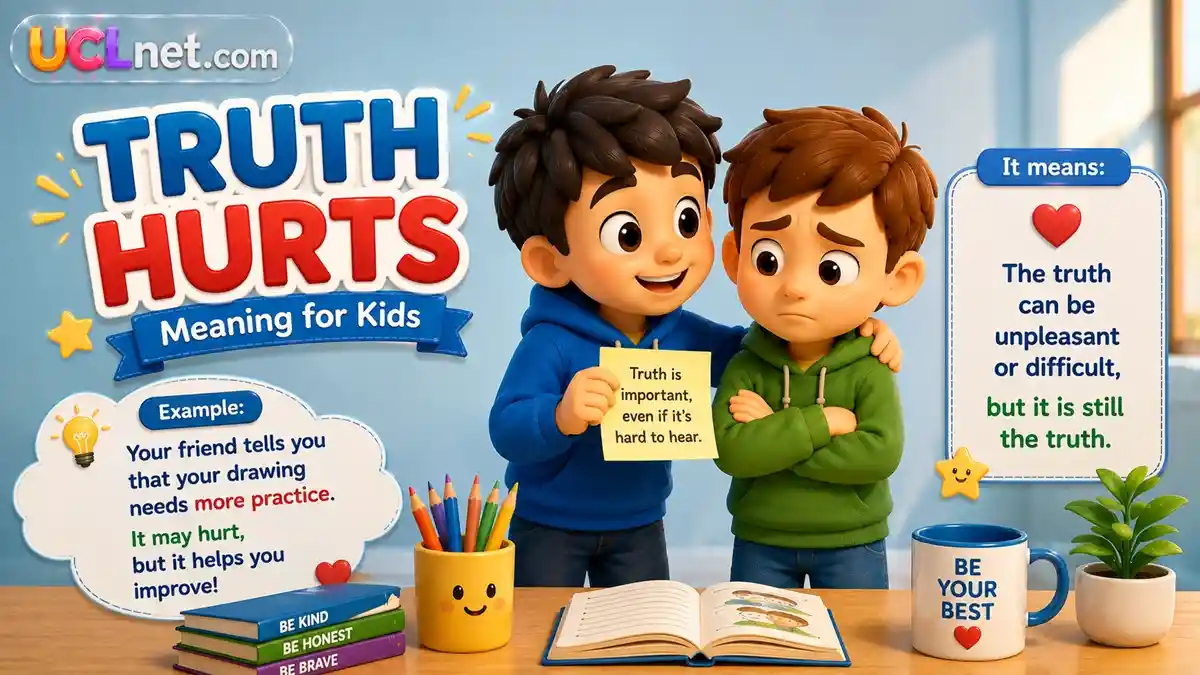
For example, imagine you drew a picture and asked your friend what they thought. Your friend said, “It is good, but you could color more carefully.” The truth hurt a little, but it helped you draw better next time!
🌱 Truth hurts meaning for kids: What does this idiom mean?
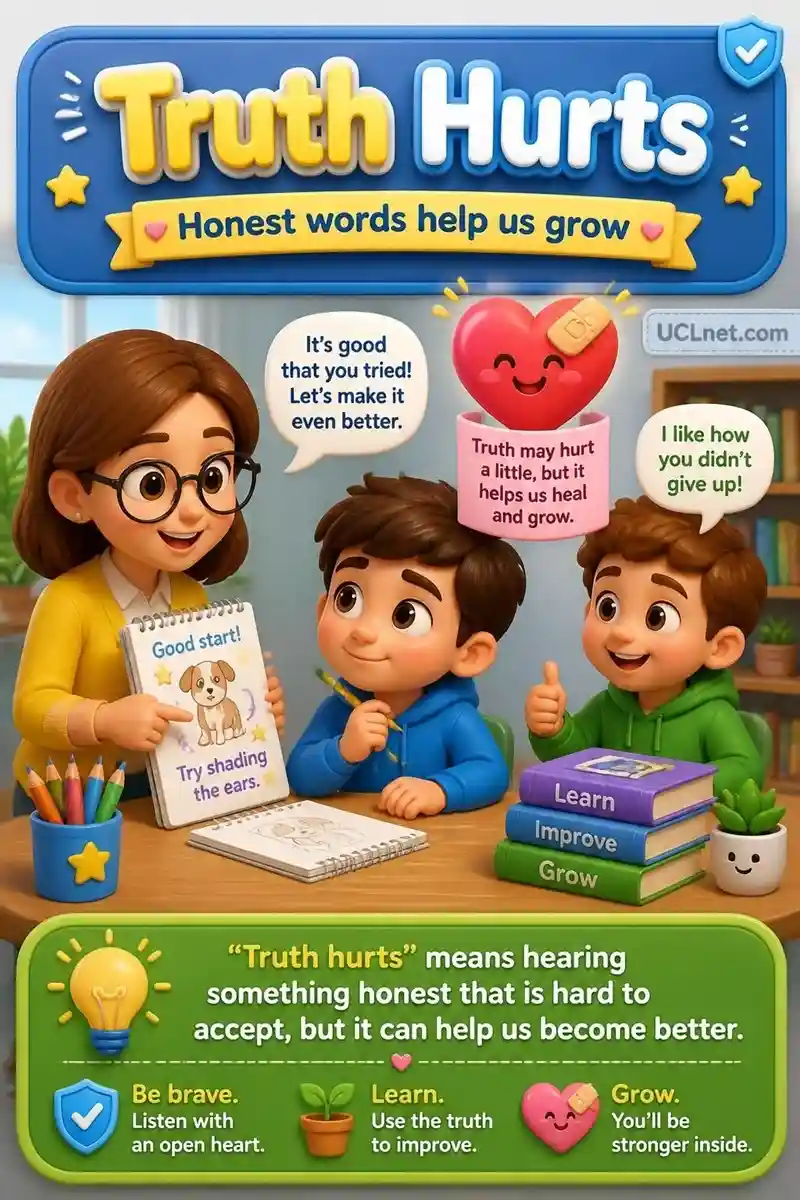
To begin with, this idiom has a very honest and important meaning. Basically, it means that sometimes hearing the truth can be painful or upsetting. In other words, the truth is not always easy to accept. Consequently, this idiom teaches us to be brave when we hear something honest. Moreover, it reminds us that even though the truth might hurt, it is usually better than a lie. Specifically, the truth hurts meaning for kids helps children understand that it is okay to feel sad when they hear something true, but they should still listen and learn from it. For example, if your teacher tells you that you need to practice more, it might hurt your feelings, but it will help you improve!
📖 Truth hurts: A fun short story about being brave
Initially, there was a boy named Max who loved to sing. He thought he was the best singer in the world. One day, his friend Emma told him, “Max, your singing is not very good. You need to practice more.” Immediately, Max felt very sad and hurt. He did not want to talk to Emma anymore. However, after thinking about it, Max realized that Emma was trying to help him. As a result, he decided to take singing lessons. Eventually, Max became a much better singer and thanked Emma for her honest advice. Therefore, Max learned that sometimes the truth hurts, but it helps us become better!
🎨 Understanding truth hurts: Meaning and opposite
Literally, this idiom means that the truth can cause emotional pain. In reality, it is a reminder that honesty is important, even when it is uncomfortable. On the other hand, the opposite of this idiom would be: “Lies feel good” or “Hide the truth to avoid pain.” However, that does not help anyone grow! Notably, the truth hurts meaning for kids is all about being brave enough to accept honest feedback and learn from it.
Summary Box: The truth can be painful to hear, but it is important for growing and becoming a better person!
| Category / Source | Detailed Description & Definition |
|---|---|
| Idiom Meaning | Hearing the truth can be painful, but it is still important and valuable. |
| Literal Meaning | The truth physically or emotionally causes pain. |
| Possible Opposite | Lies are comfortable; hiding the truth is easier. |
| Dictionary Definition | A saying that honest facts can be painful to accept. |
🔊 Truth hurts meaning for kids: Pronunciation and simple examples
To begin with, the pronunciation guide is: /truːθ hɜːrts/. Next, let us look at some simple sentences to understand this idiom better:
• First, my mom told me that I need to study more. The truth hurts, but she was right!
• Second, I asked my friend if my drawing was good. She said it needed work, and the truth hurts sometimes.
• Finally, remember this idiom: truth hurts. But facing the truth makes you stronger and smarter!
💬 Truth hurts: Short dialogue for kids about being brave
Mia: I am sad. My friend told me that I am not good at painting.
Leo: That must have hurt to hear, Mia.
Mia: Yes, the truth hurts! I wanted to cry.
Leo: But maybe your friend was trying to help you get better.
Mia: You are right. I will practice more and show her my improvement!
Leo: That is the brave thing to do! The truth hurts, but it helps us grow.
⚙️ Where to use truth hurts for kids: Different meanings, grammar tips, and historical roots
📍 How to use this idiom in different situations
Interestingly, this idiom can be used in many situations! For example, when receiving feedback at school, it reminds us to listen and learn. In friendships, it helps us understand that honesty is important. When learning new skills, it encourages us to accept criticism and improve. The message is always the same: the truth might hurt, but it helps us become better!
📝 Grammar tips and historical origins
Historically, this idiom has been used for centuries. It connects to the idea that honesty is valuable, even when it is difficult. Regarding grammar, “truth” is the subject and “hurts” is the verb. Furthermore, children can use this idiom to talk about their feelings, whereas adults might use it in conversations about difficult situations or feedback.
⚠️ Common mistakes to avoid
Some children might say “truth hurt” without the “s.” The correct version is “truth hurts.” Another common mistake is thinking this idiom means you should always say mean things. Remember, it means the truth can be uncomfortable, but it is still valuable!
📚 Mini-dictionary for new vocabulary
| Word | Simple Meaning for Kids |
|---|---|
| Idiom | A group of words that has a special meaning different from the literal words. |
| Truth | What is real and correct, not a lie. |
| Hurt | To cause pain or sadness. |
| Honesty | Being truthful and not lying. |
| Brave | Being strong even when things are hard or scary. |
| Feedback | Helpful comments or advice about how you are doing. |
| Criticism | Comments that point out things you can improve. |
| Improve | To get better at something. |
🔗 Synonyms and related phrases
Here are some similar idioms and phrases about truth:
• The truth is bitter (the truth is hard to accept)
• Honesty is the best policy (being honest is always the best choice)
• Face the truth (accept what is real and true)
• The truth will set you free (knowing the truth helps you grow)
• It is better to be hurt by the truth than comforted by a lie (truth is more valuable than comfort)

👨👩👧 Parents and teachers guide for teaching truth hurts meaning for kids
For example, educators can introduce this idiom when discussing feelings, honesty, or giving feedback. Above all, keep it gentle and reassuring so children understand that feeling hurt is normal, but the truth is still valuable. In addition, remind them that the truth hurts meaning for kids is about being brave enough to accept honest feedback and learn from it.
🎯 Fun classroom and home activities
🏃 Class game: Practice “gentle truth” where children give kind but honest feedback to each other about their artwork or projects.
🎨 Home task: Ask kids to draw a picture of a time when the truth hurt but helped them later.
🎭 Acting time: Have children role-play scenarios where they practice accepting honest feedback bravely!
❓ Questions parents and teachers often ask
Q: Is this idiom too negative for children?
A: Not at all! When taught positively, it helps children understand that honest feedback is a gift that helps them grow.
Q: How can I make this idiom fun for kids?
A: Use stories, role-play, and examples from their favorite activities like sports, art, or music!
Q: Should I correct my child if they say it wrong?
A: Gently, yes! You can say “Great try! Remember we say ‘truth hurts’.”
📝 Worksheet quiz about truth hurts meaning for kids
To sum up, test your knowledge of this honest idiom with this fun quiz! Parents and teachers can use it to check learning.
Click here to show Answer Key
1. Hearing the truth can be painful
2. Idiom
3. hurts
4. Lies feel comfortable
5. Being truthful
6. False
7. Because it helps you improve
8. A friend tells you to practice more to get better
9. Helpful comments to improve
10. Listen, learn, and try to improve
❓ Frequently asked questions about honesty
Q: Can young children understand this idiom?
A: Absolutely! With simple examples about schoolwork, art, or sports, even children as young as five can understand that the truth can be hard to hear but still valuable.
Q: Is this idiom used in everyday conversation?
A: Certainly! People use it when giving honest feedback or talking about difficult situations.
Q: Can kids use this idiom with their friends?
A: Yes! It is a helpful way to talk about honesty and feelings with friends.
Q: What is the best age to start learning this idiom?
A: Generally speaking, around age six or seven is perfect, as children start receiving more feedback at school.
📚 Explore more related lessons
Want to practice more? Check out our special categories: