👁 Views: 2,262
Sensory Tracing: The Best Way to Teach Alphabet to Preschoolers
Are you searching for effective ways to help your child learn letters? Sensory Tracing is an incredible tool that transforms alphabet lessons into a hands-on experience. Because young children learn best through touch and movement, this method is highly successful. Our guide explores how you can use simple materials to practice this game at home, making early literacy both fun and educational for your little learner.
Understanding Tactile Alphabet Learning
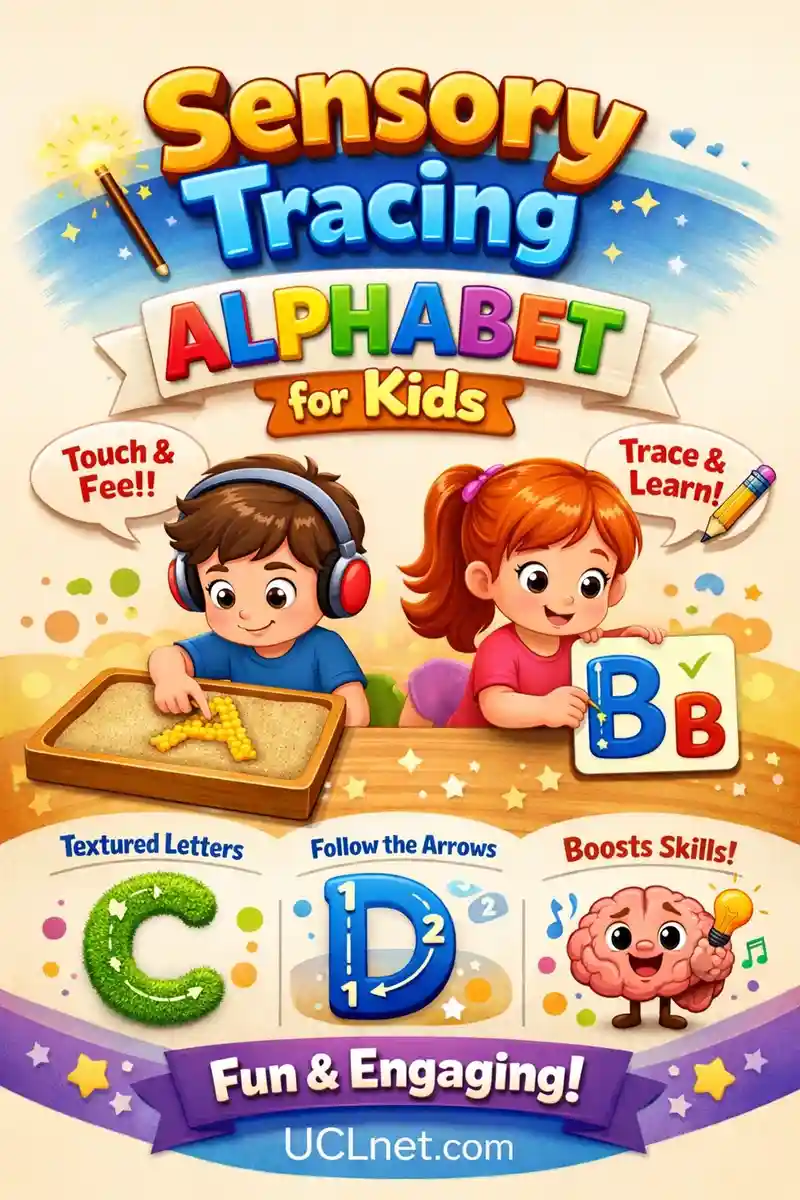
When kids engage in alphabet sensory tracing, they connect the shape of a letter to their physical movement. Furthermore, this tactile approach helps the brain store information more reliably than passive observation. Consequently, children build strong muscle memory while tracing. Moreover, Sensory Tracing allows them to correct their mistakes instantly by smoothing out the material and starting again. Therefore, your child feels less pressure and gains more confidence in their writing skills.
🌟 Word Discovery: Sense
To Sense means to become aware of something through your body, like feeling sand on your fingers. It is a way to explore the world! Are you ready to use Sensory Tracing to explore letters at UCLnet.com?
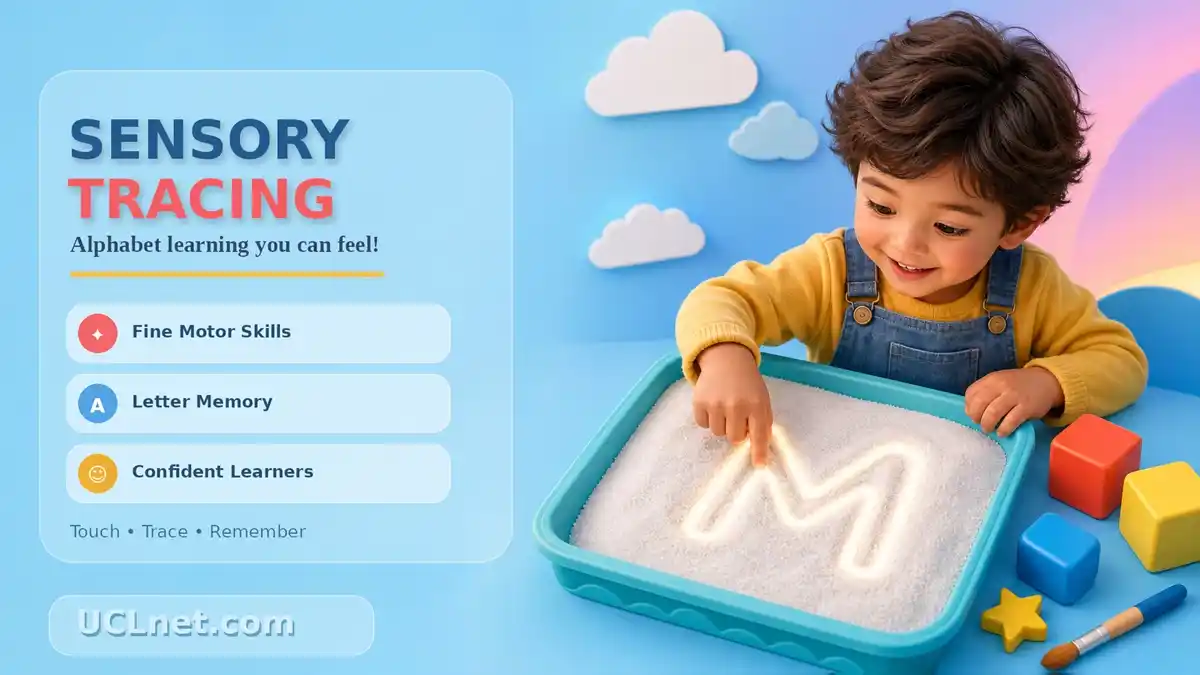
Example: “Use your fingers to sense the shape of letter M.” 🖐️
How to Set Up Your Practice Tray
Creating a setup is very simple. First, fill a flat tray with a thin layer of salt, sand, or even flour. Then, provide your child with a reference card showing the letter. Next, encourage them to perform Sensory Tracing by following the shape with their finger. In addition, keep the environment calm and supportive to enhance focus. Finally, celebrate each finished letter to keep the learning process positive.
Building Literacy Skills through Tactile Play
Ultimately, these activities are about more than just drawing shapes. They foster cognitive development in young minds. In fact, consistent practice with alphabet sensory tracing leads to better handwriting readiness later on. Consequently, your child will naturally transition into identifying complete words. In summary, your dedicated support makes all the difference as these simple tools transform learning into a joyous journey for your child.
Why these letter tracing activities work
| Learning Goal | Educational Benefit |
|---|---|
| Muscle Memory | Strengthens recall of letter shapes. |
| Fine Motor Skills | Improves finger control and writing flow. |
| Confidence | Makes learning feel safe and fun. |
Parent’s Corner
Need more ways to teach your child? Visit our main guide on English learning activities!