👁 Views: 3,318
Stationary vs Stationery: Meaning, Differences & Fun Quiz for Kids
What Is the Difference Between Stationary and Stationery?
Have you ever wondered why changing a single letter near the end of a word can transform an object at rest into writing paper and envelopes? Naturally, when young students write creative stories or complete school assignments, they frequently encounter confusing homophones like stationary vs stationery that create spelling puzzles. Although these terms sound identical when spoken out loud by native speakers, understanding stationary or stationery requires looking closely at their distinct definitions. Caring teachers and supportive parents always look for straightforward methods to guide children through tricky vocabulary without feeling overwhelmed. Therefore, this comprehensive guide provides clear definitions, smart memory tricks, practical examples, and an interactive quiz to make learning effortless and enjoyable. Consequently, mastering these spelling differences empowers every child to write and speak with complete confidence. Furthermore, exploring these language nuances early on helps students build a solid foundation for learning English vocabulary.
Specifically, knowing how to choose between stationary and stationery stops you from mixing up a parked car standing still with buying school pens and decorative envelopes!
Stationary vs stationery grammar rules lesson for kids – UCLnet.com
Deep Dive Into Stationary Meaning and Fixed Objects
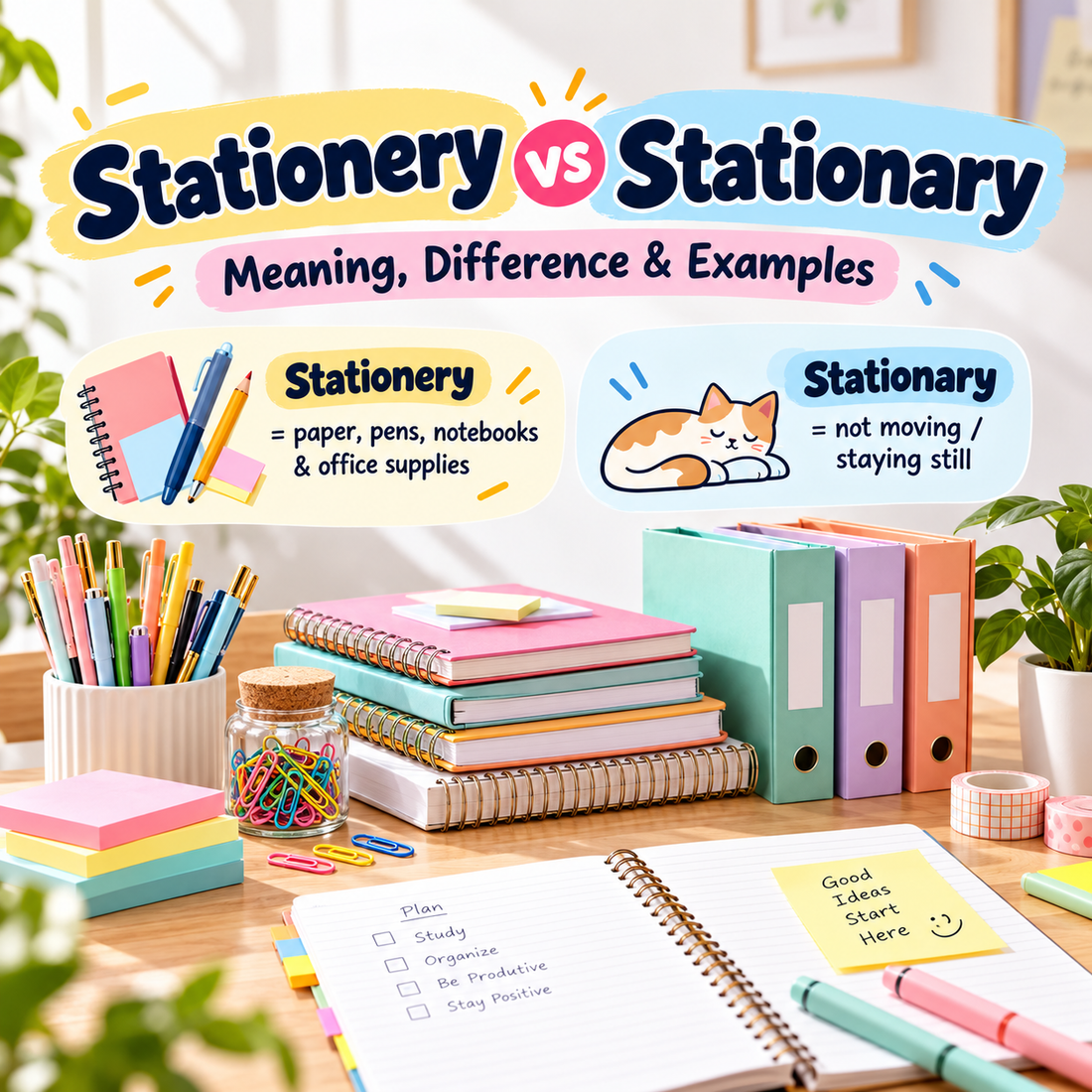
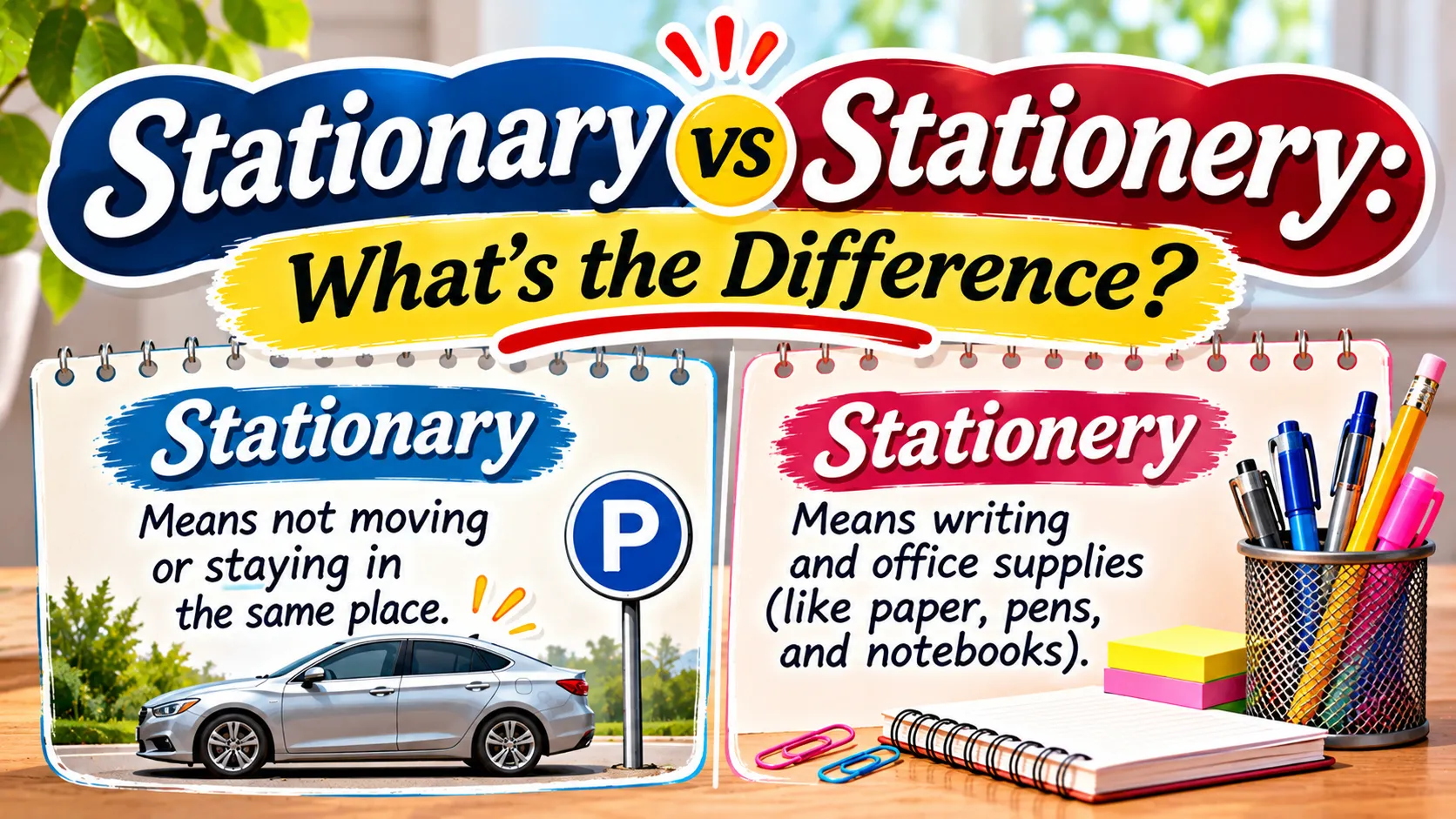
First of all, let us examine our first term in this stationary vs stationery comparison lesson. What is the true stationary meaning? Spelled with an ‘a’ near the end, it functions as an adjective meaning not moving, immobile, staying at rest, or fixed firmly in one single place. Specifically, when a vehicle stops completely at a red traffic light or an exercise bicycle remains attached to the floor during a workout, it is stationary. Therefore, understanding this descriptive word helps students describe physical motion and static objects accurately in descriptive writing. Consequently, recognizing stationary or stationery in context becomes much easier for young writers. Furthermore, here are two key ways to understand its usage:
1. Fixed and Immobile Objects
Meaning: Remaining in a single position without moving forward or backward.
Example: Accordingly, the car remained stationary at the busy intersection.
2. Fitness Equipment Usage
Meaning: Describing training gear fixed firmly in one place for indoor exercise.
Example: Similarly, he enjoys riding a stationary bicycle at the local gym.
Difference between stationary and stationery for young learners – UCLnet.com
Exploring Stationery Meaning and School Supplies
Meanwhile, let us explore our second grammar term in this stationary vs stationery guide. What is the complete stationery meaning? Spelled with an ‘e’ near the end, it functions as a noun referring to writing materials, high-quality paper, envelopes, pens, notebooks, and general office supplies. For example, when students prepare their pencil cases for back-to-school shopping, they buy various items of stationery. Therefore, stationery serves as an essential noun for classroom and office materials. Consequently, learning the difference between stationary and stationery helps young writers discuss writing tools with absolute precision. Moreover, practicing these noun categories daily expands vocabulary confidence.
Writing Paper and Envelopes
Meaning: Materials used for writing personal letters or organizing office work.
Example: Specifically, she bought decorative stationery to write a letter to her grandmother.
Quick Comparison: Stationary vs. Stationery
In short, to make the difference between stationary and stationery crystal clear before taking our practice quiz, review this quick summary chart:
| Word | Grammar Role | Example Sentence |
|---|---|---|
| Stationary | Adjective (not moving, standing still). | The bus stayed stationary. |
| Stationery | Noun (writing paper, pens, envelopes). | I need new stationery for school. |
Teacher & Parent Guidance & Memory Tricks
Furthermore, parents and classroom teachers can use these smart tips during study time when teaching stationary vs stationery for kids:
- The Letter ‘E’ Trick: Notice that station-e-ry ends with an ‘e’, just like envelopes, paper, or pencils (which you write with!).
- The Letter ‘A’ Trick: Notice that station-a-ry contains an ‘a’, just like being at rest or an automobile standing still.
- Real-Life Error Correction: Students frequently confuse stationary or stationery and write: “I bought new stationary pens.” This sentence is incorrect because writing items are stationery.
Easy Everyday Dialogues for Kids
In addition to memorizing spelling rules, reading short dialogues aloud helps kids practice stationary vs stationery in natural sentences. Try practicing these conversations with friends:
Dialogue 1:
Driver: “Why are all the vehicles stopping here?”
Passenger: “Because the traffic is completely stationary right now.”
Dialogue 2:
Student: “Where did you get that pretty letter paper?”
Friend: “I bought it at the local stationery shop downtown.”
Mini Dictionary for Young Learners
Before taking the interactive quiz below, please review these key vocabulary terms pulled directly from our stationary vs stationery lesson text:
| Word | Simple Meaning | Example Sentence |
|---|---|---|
| Immobile | Not moving or unable to move. | The statue remained immobile in the park. |
| Envelope | A flat paper container used for enclosing letters. | He sealed the letter inside a white envelope. |
| Traffic | Vehicles moving or stopped along a public road. | Morning traffic delayed our arrival at school. |
| Homophone | Words having the same sound but different spellings. | Stationary and stationery form a tricky homophone pair. |
Spelling trick for stationary vs stationery – UCLnet.com
Practice Quiz: Stationary vs. Stationery
Therefore, test your knowledge of stationary vs stationery by trying these ten practice questions:
Click here to show Answer Key
1. Not moving, immobile, or fixed in one place
2. True
3. Envelope
4. stationary
5. True
6. She bought decorative stationery to write a letter.
7. Immobile
8. To prevent spelling errors and build writing confidence
9. stationery
10. It has an ‘a’ like being at rest or automobile
Explore More Related Categories
Want to discover more English vocabulary lessons and confusing words? If so, explore our related categories below: