👁 Views: 2,396
Kids Garden Vocabulary: Fun English Words & Nature Guide 🌸🌱 🌳🐝🌻
Kids Garden Vocabulary & Nature English on UCLnet.com
Welcome to our comprehensive guide dedicated to Kids Garden Vocabulary! Teaching young learners and kindergarten children a new language becomes remarkably effortless, relaxing, and enjoyable when it happens naturally outdoors among blooming flowers, green grass, and friendly insects. Furthermore, instead of forcing children to memorize abstract grammar rules inside a classroom, they absorb essential everyday words by experiencing them firsthand during outdoor play and nature exploration. Therefore, UCLnet.com has prepared an extensive breakdown of garden elements, tools, and nature expressions, designed specifically to help parents and kindergarten teachers guide kids through immersive English learning. Consequently, young learners acquire new terminology without stress while exploring daily life concepts.

Kids Garden Vocabulary for Outdoor Routines
Moreover, exploring these structured educational topics helps build peaceful language habits, significantly boosts listening comprehension, and fosters joyful communication between adults and children during sunny yard hours. Thus, incorporating Kids Garden Vocabulary into early daily schedules guarantees steady progress. Consequently, you can explore this complete guide, mini dictionary, and review quiz below whenever you need fresh learning activities for your outdoor environment. Thus, every parent can easily transform into an inspiring, supportive language coach who guides their child toward bilingual confidence effortlessly.
Essential Garden Objects and Expressions
Furthermore, effective implementation of Kids Garden Vocabulary relies heavily on familiar nature objects experienced right in the yard or park during sunny afternoons. When educators and parents introduce target words during actual outdoor activities—such as planting seeds, watering flowers, or watching butterflies—children process linguistic input much faster and retain vocabulary permanently. Additionally, regular repetition in real-world contexts transforms passive recognition into active speech output, making bilingual progression smooth, fun, and completely natural for every child. Therefore, practicing Kids Garden Vocabulary daily creates lasting memory pathways.
Below, you will find the detailed key vocabulary list divided into core nature elements, growing plants, tools, and helpful expressions to practice with young learners:
Core Nature Terms & Tools
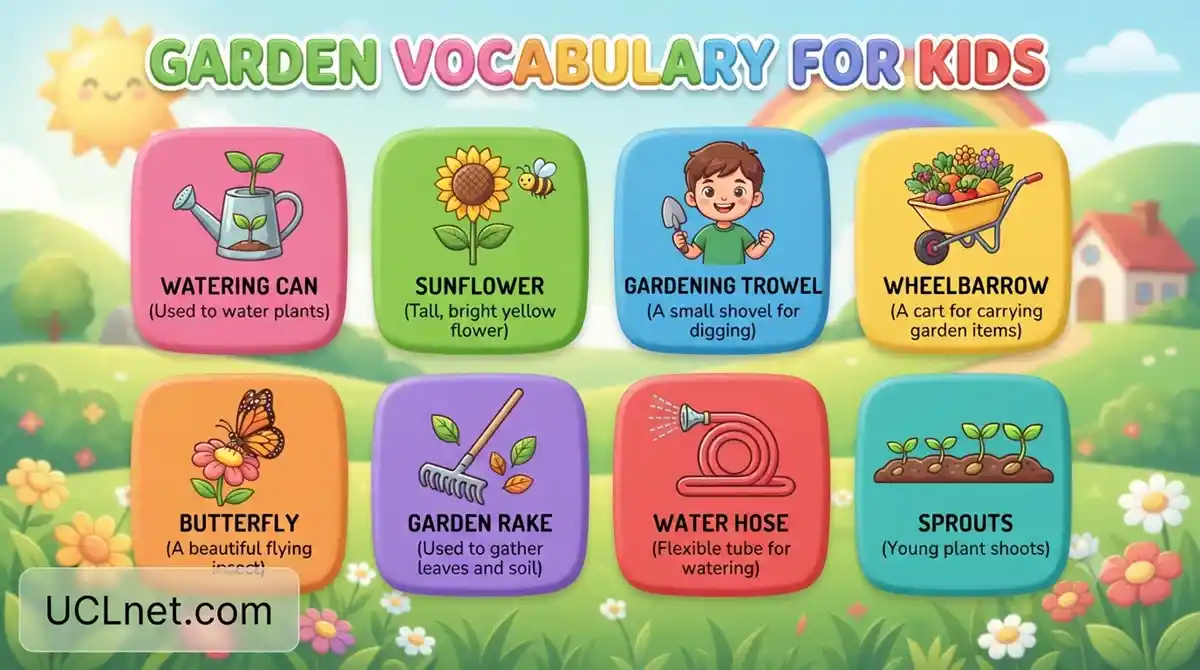
- Flower: The colorful, sweet-smelling blossom of a plant.
- Tree: A tall woody plant with a trunk, branches, and leaves.
- Grass: Short green plants that cover the ground in lawns and yards.
- Butterfly: A flying insect with large colorful wings that feeds on nectar.
- Bee: A flying insect known for gathering pollen and making honey.
- Watering Can: A portable container with a spout used to water plants.
- Garden Tools: Implements like trowels and rakes used to care for soil and plants.
- Nature: The physical world including plants, animals, and landscapes.

Why Teach These Words Early?
Moreover, integrating Kids Garden Vocabulary into daily outdoor routines offers wonderful psychological and developmental advantages for growing children. Because children feel active, curious, and energized while playing outside in the garden, their cognitive faculties are exceptionally receptive to acquiring new foreign vocabulary. Therefore, parents and teachers across the globe trust this structured, engaging approach because it turns everyday nature walks into rewarding, stress-free language lessons without any pressure. Furthermore, establishing a joyful outdoor atmosphere ensures that learning feels like an exciting adventure rather than an exhausting task. Consequently, core mastery of Kids Garden Vocabulary supports holistic growth.
📖 Mini Dictionary for Kids
Review these key terms with your young learners before practicing daily garden conversations:
| Word | Simple Definition for Kids |
|---|---|
| Flower | The colorful, sweet-smelling blossom of a plant. |
| Tree | A tall woody plant with branches and leaves. |
| Grass | Short green plants covering the yard ground. |
| Butterfly | A flying insect with colorful wings. |
| Watering Can | A container with a spout used to water plants. |
Summary and Next Steps
Furthermore, mastering nature English requires joyful consistency and comforting outdoor exposure. Therefore, keep this guide handy and review new garden words with your child every week to ensure continuous language development! Moreover, combining these nature items with exciting Kids Garden Vocabulary scavenger hunts will make retention permanent. Thus, families can enjoy seamless English growth.
📝 Kids Garden Vocabulary Quiz Challenge
Interactive Review Questions (70% Kids / 30% Teens)
Test your understanding using this interactive quiz challenge below:
Answer Key (Spoiler Alert)
Click here to reveal the answer key
- Flower
- Tree
- True
- Butterfly
- Bee
- True
- Watering Can
- Garden Tools
- Nature
- Because it provides structured daily learning guides for families
Parent’s Corner
Discover more daily learning guides and fun nature games to accelerate your child’s language journey outdoors!