👁 Views: 1,120
English Months Explained: Names, Meanings & Roman Origins
|
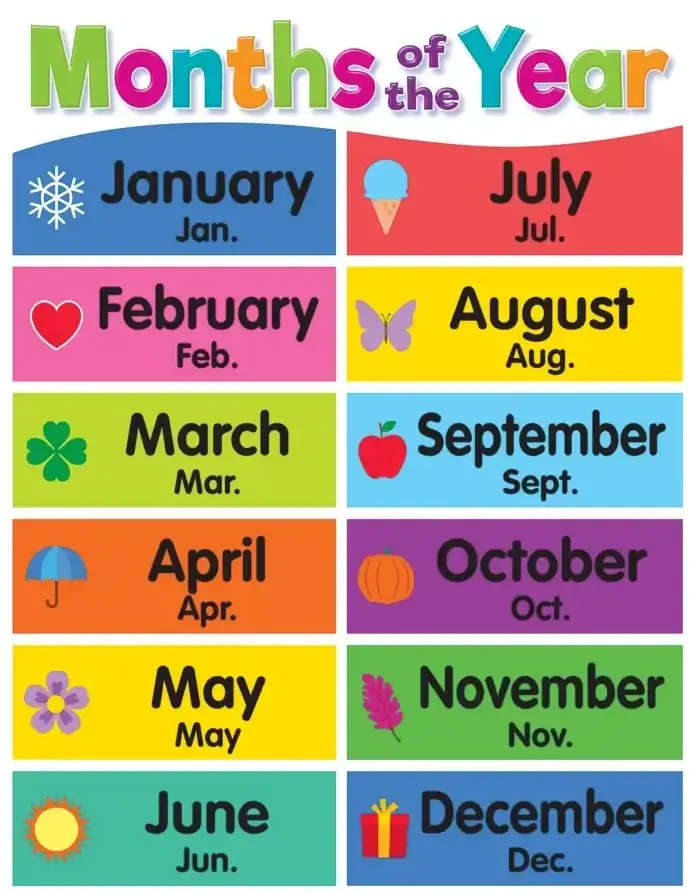
English months have fascinating names with deep historical roots. Have you ever wondered why we call them January, February, or August? This article explores all twelve months and reveals their connections to Roman gods, mythology, and history. Moreover, learning these English months helps you understand Western culture while improving your language skills. Furthermore, each month carries a unique story that makes calendar learning enjoyable. |
✨ Why English Months Have Special MeaningsMost importantly, the names of our calendar months come from Roman mythology. Additionally, some derive from Latin words about nature or historical figures. Consequently, each month tells a unique story. For instance, the first months honor Roman gods, while July and August celebrate real people—Julius Caesar and Emperor Augustus. Understanding the names of these months connects you to 2,000 years of history. Therefore, learning the English months is both educational and entertaining. |
1️⃣ January – First of the English MonthsJanuary is the first month of the calendar year. Interestingly, it is named after Janus, the Roman god of beginnings and transitions. Janus had two faces—one looking forward to the future and one backward to the past—making him perfect for the start of a new year. Its Latin root “ianua” means “door,” symbolizing the doorway to fresh beginnings. Originally, the Roman year began in March, but around 153 BC, January became the first month. Since then, January has marked the beginning of our modern English months. |
2️⃣ February – Second Month of PurificationFebruary comes from the Latin word “februum,” meaning “purification.” During this time, Romans held a festival called “Februa” on February 15th to cleanse souls from the previous year’s sins. In the original Roman calendar, February was actually the last month of the year before calendar reforms moved it to its current position. Nevertheless, February remains an important part of our twelve English months. |
3️⃣ March – Third English Month & Spring’s ArrivalMarch was originally the first month in the ancient Roman calendar. People named it after Mars, the Roman god of war. Romans believed that with spring’s arrival in March, nature triumphs over winter, like a battle where warmth conquers cold. Until 1752 in England, the new year actually began on March 25th, close to the spring equinox. Today, March stands as the third of our twelve English months, marking the true start of spring in many cultures. |
4️⃣ April – Fourth English Month of BloomingApril’s name likely comes from the Latin word “aperire,” meaning “to open.” This opening refers to flowers, buds, and trees blooming in spring. In Roman culture, people dedicated this month to Venus, the goddess of love and beauty, making April a time of renewal and romance. Similarly, April continues to be celebrated worldwide as a month of natural beauty within our calendar of English months. |
5️⃣ May – Fifth Month of GrowthMay is named after Maia, the Greek goddess of fertility and growth. Alternatively, another theory suggests it comes from the Latin “maiores” (meaning ancestors), contrasting with June which may derive from “iuniores” (youths). Either way, May represents growth, warmth, and the full arrival of spring. Consequently, May stands as one of the most pleasant English months in many parts of the world. |
6️⃣ June – Sixth English Month of LoveJune is named after Juno, the Roman goddess of marriage, women, and motherhood—and wife of Jupiter, king of the gods. Due to its pleasant weather and association with love, people continue to choose June as one of the most popular months for weddings. As an alternative theory, the name may come from Latin “iuniores” (young people). Regardless of its origin, June remains a beloved English month celebrated across cultures. |
7️⃣ July – Seventh Month Honoring CaesarJuly was originally called “Quintilis” (meaning “fifth”) in the Roman calendar. Following Julius Caesar’s birth and death in this month, the Roman Senate renamed it in his honor in 44 BC. This marked the first time a month was named after a historical figure rather than a deity—a revolutionary change in calendar history. Subsequently, July became an important milestone in how we name our English months. |
8️⃣ August – Eighth Month Honoring AugustusAugust was initially named “Sextilis” (“sixth”). In 8 BC, the Roman Senate renamed it to honor Augustus, the first Roman Emperor. Augustus achieved significant victories, including the conquest of Egypt, during this month. To honor him properly, Romans even increased August’s days from 30 to 31—taking one day from February! Thus, August completes the summer portion of our twelve-month year. |
9️⃣-1️⃣2️⃣ September to December – Final English MonthsSeptember, October, November, and December are the final four months. Their names come from Latin numbers: septem (seven), octo (eight), novem (nine), and decem (ten). Why the mismatch? Because in the original Roman calendar, the year started in March, making these the 7th through 10th months. When January and February became the first two months, these four months shifted positions but kept their original names—a quirk that remains in our calendar today. Despite this historical oddity, these final months complete our annual cycle beautifully. |
✅ Mastering All Twelve English MonthsLearning all twelve English months is essential for English fluency. The first six months mostly honor Roman gods. July and August celebrate historical leaders. The last four months keep their ancient numbered names. Understanding these months connects you to Western history and culture. Moreover, practicing all twelve months regularly will boost your confidence in conversations. Ultimately, the journey through the English months reveals how language, history, and culture intertwine beautifully. |