👁 Views: 489
Family Members’ Vocabulary: Why Learning It Matters
Understanding how to talk about your family members in English is a foundational skill for every language learner. Whether you’re introducing yourself, sharing stories, or filling out forms, knowing the right words builds confidence and fluency. Moreover, learning this vocabulary connects you emotionally to the English language.
In Lesson 2 of the Word by Word textbook, learners explore one of the most practical and emotionally rich topics: family members’ vocabulary. This lesson not only teaches words but also helps you connect personally with the language.
Key Family Members Vocabulary from Word by Word Lesson 2
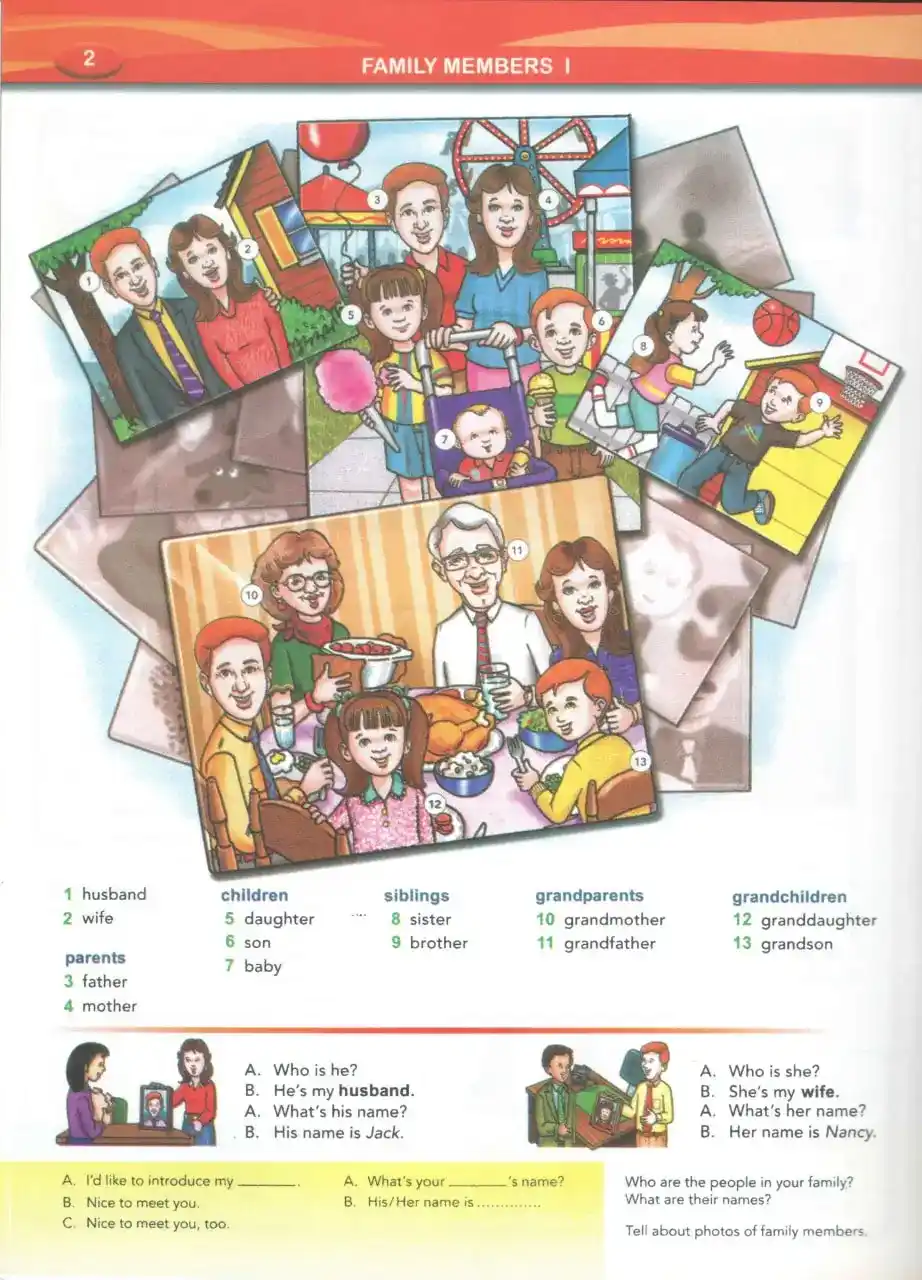
The second lesson of Word by Word introduces 18 essential terms related to family relationships. Here’s a clear list with definitions, examples, and numbering:
1. Husband – A married man.
Example: My husband works as an engineer.
2. Wife – A married woman.
Example: Her wife is a teacher.
3. Parents – A person’s father and mother together.
Example: My parents live in Canada.
4. Father – A male parent.
Example: His father enjoys gardening.
5. Mother – A female parent.
Example: She calls her mother every Sunday.
6. Children – Sons and daughters (plural of child).
Example: They have three children.
7. Daughter – A female child.
Example: Their daughter is in high school.
8. Son – A male child.
Example: He is the youngest son in the family.
9. Baby – A very young child, especially from birth to age 1.
Example: The baby is sleeping.
10. Siblings – Brothers and sisters (used collectively).
Example: I have two siblings: a brother and a sister.
11. Sister – A female sibling.
Example: My sister studies medicine.
12. Brother – A male sibling.
Example: His brother plays soccer.
13. Grandparents – A person’s father’s or mother’s parents.
Example: We visit our grandparents every summer.
14. Grandmother – The mother of your father or mother.
Example: My grandmother bakes delicious cookies.
15. Grandfather – The father of your father or mother.
Example: His grandfather tells great stories.
16. Grandchildren – The children of your son or daughter.
Example: They love spending time with their grandchildren.
17. Granddaughter – The daughter of your son or daughter.
Example: She is my only granddaughter.
18. Grandson – The son of your son or daughter.
Example: Their grandson just started kindergarten.
Effective Tips for Learning Family Members Vocabulary
Learning vocabulary is most effective when you engage with it actively. For instance, drawing your own family tree helps visualize relationships. Additionally, using real-life tools makes the process stick.
- Use a family tree diagram: Draw your own family and label each member using the English terms.
- Practice with photos: Point to relatives in photos and say, “This is my brother,” or “That’s my grandmother.”
- Create sentences: Write 2–3 sentences about your real or imaginary family using at least 10 of these family members vocabulary words.
- Flashcards: Make digital or paper flashcards with the word on one side and a picture or definition on the other.
Common Phrases Using Family Members Vocabulary
In fact, knowing individual words isn’t enough—you need to use them in natural contexts. Here are some everyday phrases that bring this vocabulary to life:
- “I come from a big family.”
- “Do you have any siblings?”
- “My parents are from Iran.”
- “She’s the youngest daughter.”
- “We celebrate holidays with our grandparents.”
Why Visual Learning Works for Family Members’ Vocabulary
The Word by Word series uses visual learning, making it ideal for beginners. For example, Lesson 2 shows clear illustrations of family groups, helping learners connect words like husband, daughter, and grandfather to real-life roles. Consequently, you remember each term more easily.
How This Family Member’s Vocabulary Lesson Builds Language Skills
Moreover, this approach does more than teach words—it builds full communication skills. Not only does it support speaking and listening, but it also reinforces reading and writing through structured practice. As a result, learners gain confidence to talk about something deeply personal: their own family.
Final Thoughts: Make Family Members Vocabulary Personal
Mastering this vocabulary is more than memorization—it’s about sharing your story. Therefore, whether you’re a student, teacher, or self-learner, this lesson lays the groundwork for meaningful communication.
Furthermore, don’t hesitate to get creative! Try describing your family using all 18 family members vocabulary words—even if some members are imaginary.
Conversation Practice: Using Family Members Vocabulary
B. He’s my husband.
A. What’s his name?
B. His name is Jack.
B. She’s my wife.
A. What’s her name?
B. Her name is Nancy.
B. Nice to meet you.
C. Nice to meet you, too.
B. His / Her name is …………
What are their names?