👁 Views: 2,459
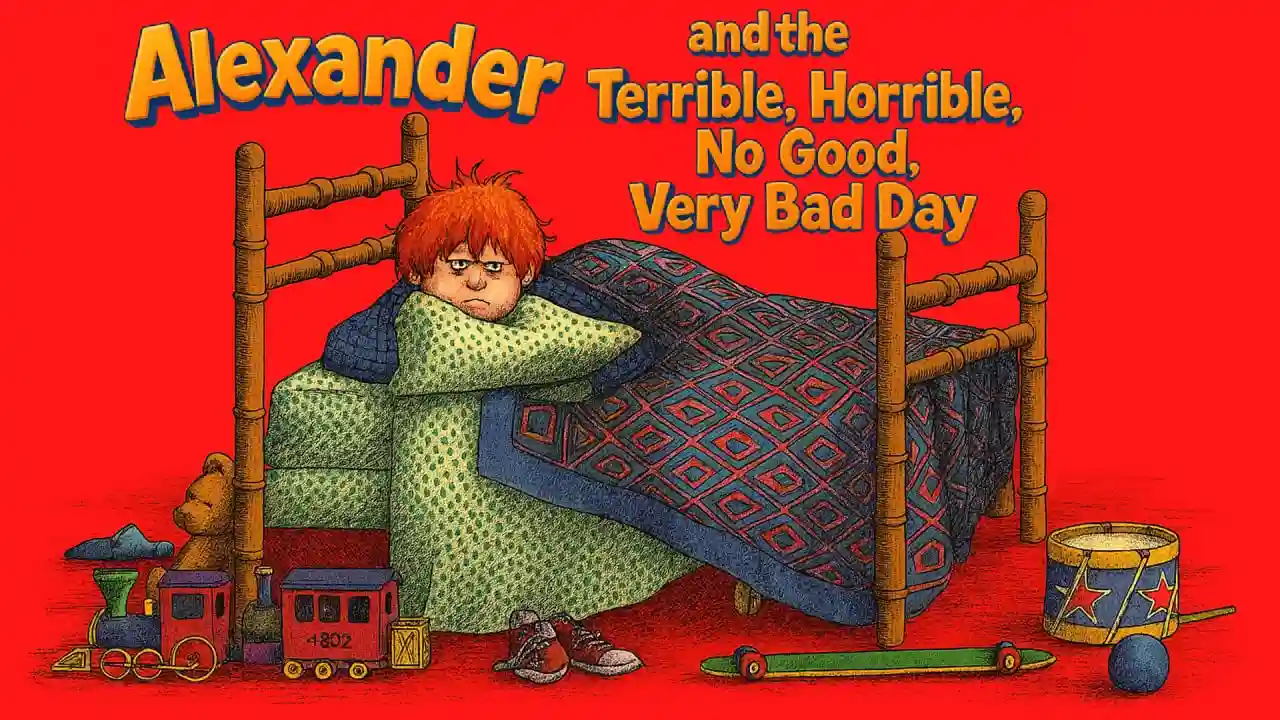
📚 Alexander and the Terrible, Horrible, No Good, Very Bad Day 🐻
What Is Alexander and the Terrible, Horrible, No Good, Very Bad Day?
This story by Judith Viorst is written in simple English for kids. It helps children understand feelings like frustration, sadness, and hope. Alexander faces a very bad day. But he learns how to deal with problems and emotions.
Alexander’s Very Bad Day – Story Summary for Kids
The story starts when Alexander wakes up. Everything goes wrong. He spills his breakfast. His shoes are uncomfortable. He feels frustrated.
At school, nothing works out. He loses his pencil. His friends are not friendly. His teacher is strict. Alexander thinks, “Why is my day so terrible?”
At home, he finds more problems. His little brother bothers him. Dinner is not tasty. Even his bedtime is not perfect.
The story ends with Alexander learning that everyone has bad days sometimes. Tomorrow can be better. This story teaches children about feelings, patience, and hope.

Other Examples of Bad Days
- Emma forgot her homework at home.
- Tom lost his favorite toy.
- Lily spilled juice on her drawing.
- Sometimes, we all have days like Alexander!
Mini Dictionary 📖
- Frustrated – feeling upset when things go wrong
- Terrible – very bad
- Patience – staying calm even when things are hard
- Annoying – causing irritation or trouble
- Hope – believing that things can get better
Frequently Asked Questions
Is Alexander’s day really bad?
Yes, Alexander faces many problems. But the story shows that everyone has bad days sometimes.
What is the main lesson?
The main lesson is that bad days happen to everyone, and hope, patience, and courage help us continue.
Is this story suitable for children under 10?
Yes. It is written in simple English and is easy for children aged 6–10 to understand.
Alexander’s Very Bad Day – Quick Worksheet
- What went wrong for Alexander in the morning?
- How did his school day go?
- What did he learn at the end of the story?
Alexander Story – Fun Worksheet for Kids
Read the story carefully. Then answer these questions. This activity helps kids understand characters, emotions, and life lessons. It also improves reading and thinking skills.
Part 1: Reading Comprehension
1) What happened to Alexander at breakfast?
_____________________________________
2) How did Alexander feel at school?
_____________________________________
3) What did Alexander learn at the end?
_____________________________________
4) Name one problem Alexander had at home.
_____________________________________
5) Why is this story important for kids?
_____________________________________
Part 2: True or False
1) ____ Alexander spilled his breakfast.
2) ____ Alexander had a perfect day.
3) ____ Everyone can have bad days sometimes.
4) ____ Alexander learns patience and hope.
5) ____ The story is too hard for kids under 10.
Part 3: Vocabulary Matching
Match the words with their meanings:
1) Frustrated
2) Terrible
3) Patience
4) Annoying
5) Hope
a) Believing things can get better
b) Feeling upset when things go wrong
c) Staying calm even when things are hard
d) Very bad
e) Causing trouble or irritation
Answers:
1) ____ 2) ____ 3) ____ 4) ____ 5) ____
✏️ The Full Story
Alexander and the Terrible, Horrible, No Good, Very Bad Day is a popular children’s book by Judith Viorst. It is suitable for kids aged 6–10.
Because of copyright, UCLnet.com cannot share the full original text. You can purchase the official book from online bookstores and local shops.