👁 Views: 11,606
Skill, Talent, and Ability: What’s the Real Difference?
Many English learners often confuse the words skill, talent, and ability. These words sound similar, but they don’t mean exactly the same thing. In this article, you will learn the key differences between them with definitions, real-life examples, and helpful expressions. Understanding these differences will make your English more accurate and natural.

Definitions from the Oxford Dictionary
Talent (noun) /ˈtælənt/: a natural gift or special ability that someone is born with. Synonyms: flair, aptitude, knack, brilliance, artistry.
Example: She has a talent for music.
Skill (noun) /skɪl/: the ability to do something well because you have practiced and learned it. Synonyms: expertise, mastery, competence, craftsmanship.
Example: His skill in negotiation helped the company succeed.
Ability (noun) /əˈbɪləti/: the power, potential, or capacity to do something. It can be natural or developed over time.
Example: They have the ability to speak three languages.
Synonyms: capability, capacity, power, potential, competence.
Skill vs. Talent vs. Ability — Explained Simply
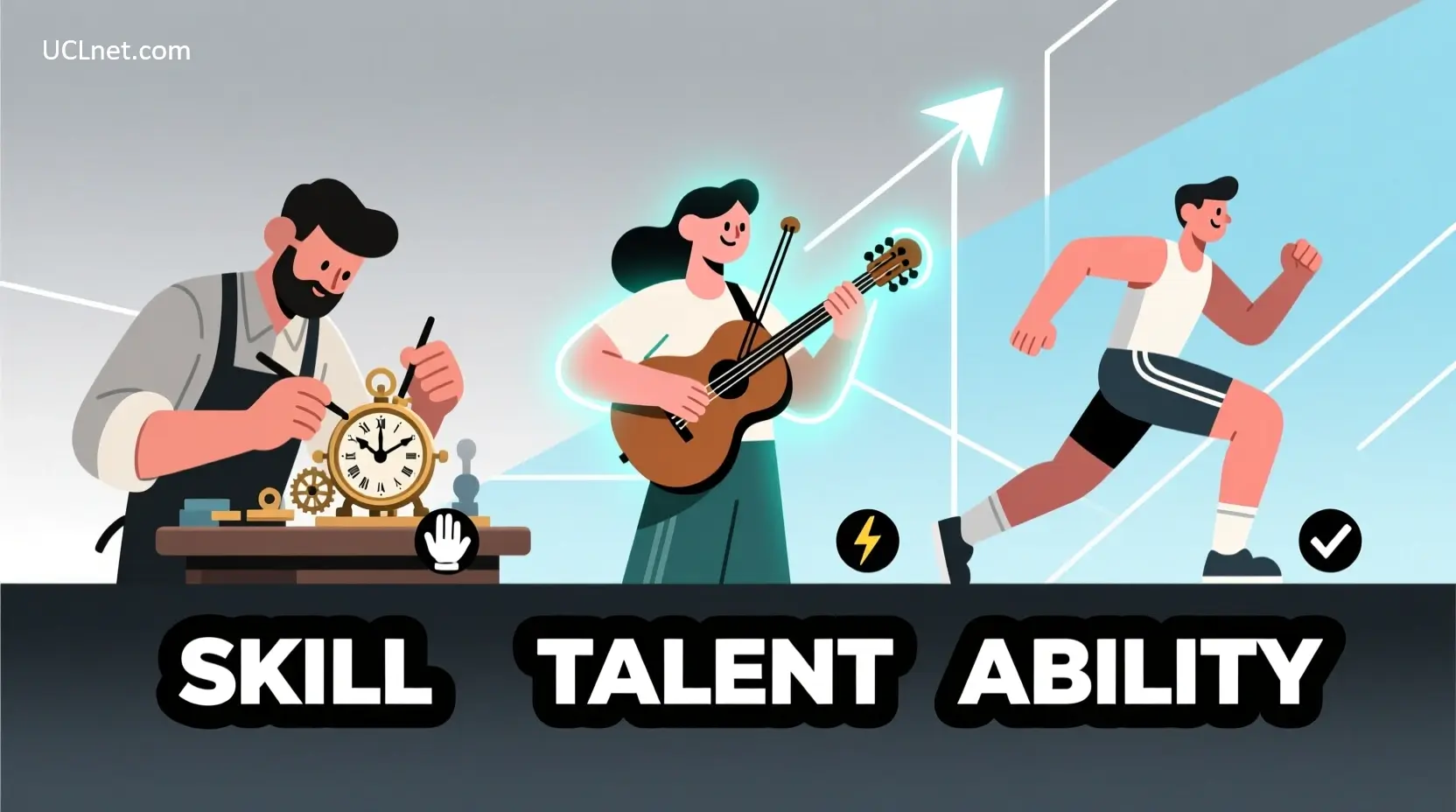
Talent is something you are born with — your natural gift. Skill is something you develop through learning, repetition, and effort. Meanwhile, ability is the general capacity to do something — whether it’s natural or learned.
In short: Talent is your natural potential, Skill is your developed strength, and Ability is your overall capacity.
- Talent → Something you are born with (natural).
- Skill → Something you learn and practice (developed).
- Ability → The capacity to perform something (can be natural or learned).
For example, someone may have a talent for drawing, but they must practice to gain the skill to paint professionally. Their ability includes both the talent and the learned skills that help them perform well.
Click here to watch the video on YouTube
Common Expressions with Skill, Talent, and Ability
To be good at something: You can do something well. Example: They are good at swimming.
Born (something) as a talent: Naturally having a gift. Example: She is a born singer.
Head and shoulders above others: To be much better than others. Example: He is head and shoulders above his teammates.
One of a kind: Unique and exceptional. Example: Rose is one of a kind in her creativity.
To do something in one’s sleep: To do something easily. Example: I can type in my sleep!
To have a magic touch: To handle problems successfully. Example: They have a magic touch with plants.
To have an eye for something: To easily notice quality or details. Example: She has an eye for interior design.
Hidden talent: A talent people didn’t know you had. Example: Jack’s hidden talent in math surprised everyone.
How to Use Skill, Talent, and Ability in Sentences
- Talent: She has a talent for languages.
- Skill: They improved their writing skills after months of practice.
- Ability: I admire your ability to stay calm under pressure.
Notice how these words can sometimes overlap, but each focuses on a different aspect of performance: natural gift, learned expertise, or general capacity.

Key Takeaways
- Talent is natural.
- Skill is developed through practice.
- Ability is the general power to perform something.
- Combining your talents and skills increases your overall ability to succeed.