👁 Views: 2,292
🌟 Idiom Discovery: Exploring Cut and Run Meaning
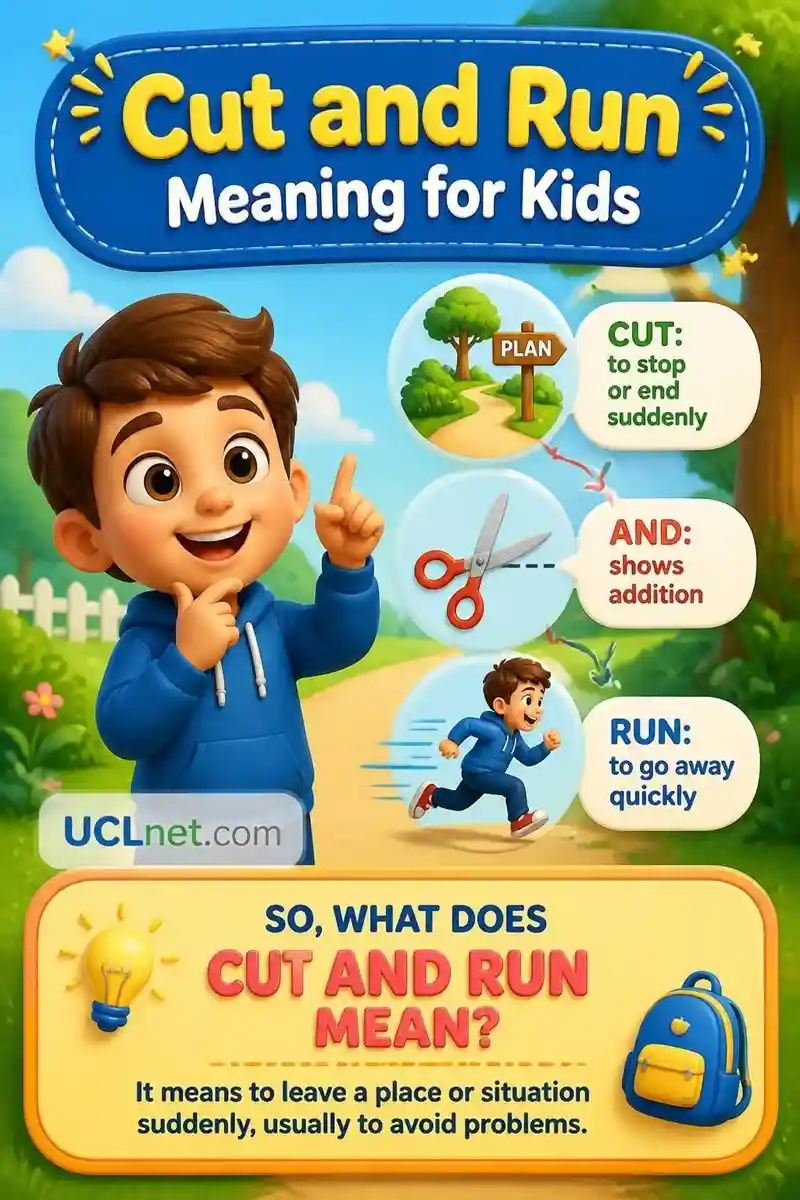
When discovering wonderful English expressions, understanding the cut and run meaning is an exciting way for kids to talk about escaping tricky situations quickly. Consequently, it means leaving a place fast when things become too difficult or unpleasant. Furthermore, are you ready for your next international English adventure at UCLnet.com?
Example: “When the sudden rainstorm started, the kids decided to cut and run for cover!” 🌧️
A Cozy Classroom Story About Swift Escapes
Welcome back to our wonderful corner of English learning! Every day brings new adventures and sometimes unexpected puzzles. For instance, let us imagine a sunny afternoon in a school playground where Leo and Sam were playing a game of tag. Suddenly, dark clouds gathered overhead, and heavy thunder began to rumble loudly. Sam looked at the dark sky, grabbed Leo’s hand, and shouted that they needed to rush away right before the rain poured down.
As a result, through stories like this, young learners grasp how native speakers describe swift departures from uncomfortable moments. Therefore, exploring this useful phrase allows children to connect daily actions with engaging conversation skills easily.
Understanding Core Concepts and Possible Opposites
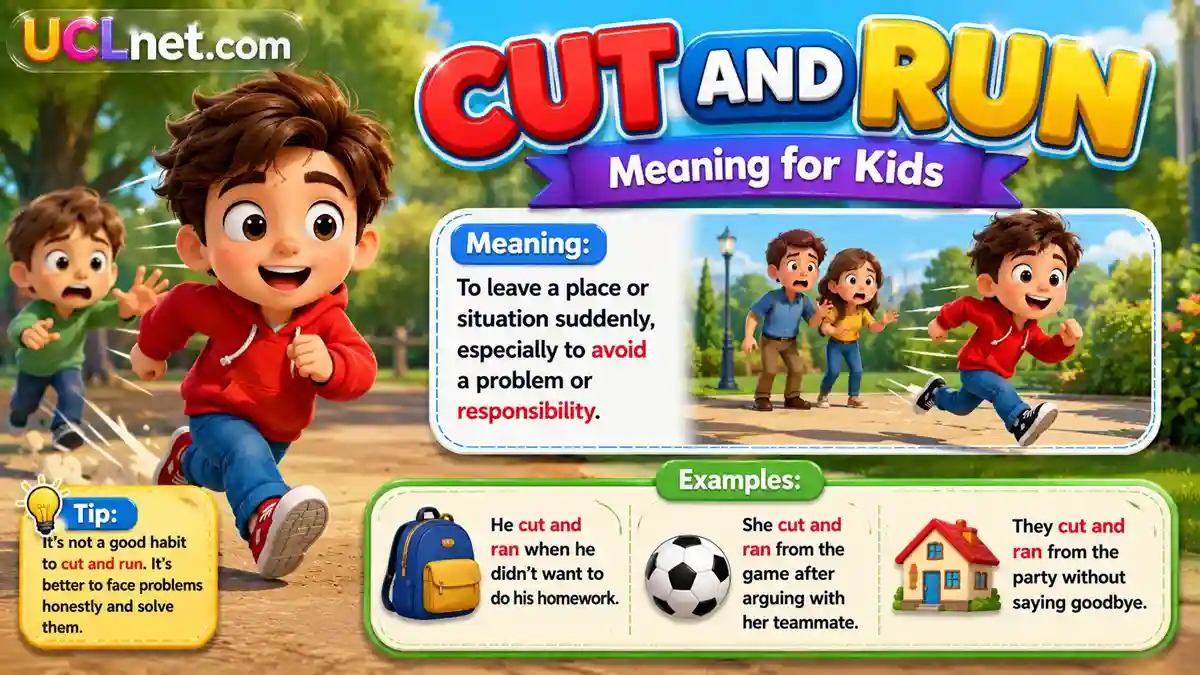
Grasping the core definition becomes much easier when we compare it with its opposites. Specifically, the phrase signifies escaping rapidly from a tough spot, fleeing danger, or avoiding trouble. Conversely, opposite actions include standing firm, facing challenges bravely, or staying calm to resolve a difficult problem.
- Core Definition: To leave quickly and escape a difficult or unpleasant situation.
- Opposite Concept: To stand firm, face challenges, and stay bravely.
🛑 Literal Interpretation Versus Real Application
Literal Interpretation: Taking a pair of sharp scissors to slice up a running track!
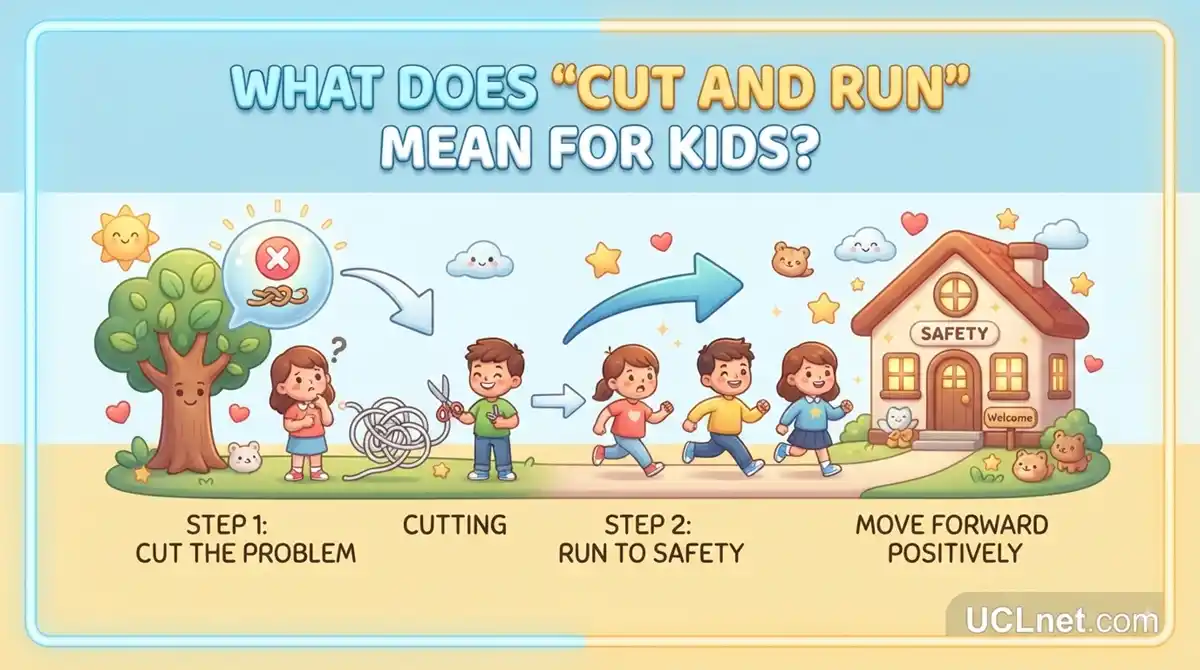
Actual Interpretation: Fleeing swiftly from an unpleasant or tricky situation to stay safe.
Pronunciation Practice and Vocal Rhythm
Mastering phonetic sounds helps children build speaking confidence. Meanwhile, practice saying the expression clearly with correct intonation:
- IPA Transcription: /kʌt ənd rʌn/
- Phonetic Breakdown: CUT — AND — RUN
- Practice Routine: Repeat after your teacher: LET US RUSH AWAY NOW! 🏃♂️
Everyday Examples and Fun Conversations
Children learn best through practical examples and natural dialogues used in everyday settings. Thus, look at these wonderful sentences:
- Example 1: “When the angry bees appeared near the picnic, the children had to get away fast.”
- Example 2: “She realized the game was getting too messy and decided to make a quick exit.”
Mini Dialogue:
Emma: “Why did you leave the playground so fast?”
Max: “Because it started to hail, so I had to hurry indoors!”
Grammar Rules and Common Mistakes to Avoid
This expression functions flexibly as an action phrase describing rapid departure. Children should remember that it is an informal idiom used primarily in casual conversation and storytelling. Furthermore, a common mistake is translating it word-for-word into other languages, which destroys its nautical historical flavor. Adults use it in discussions about escaping commitments, whereas kids apply it naturally to sudden weather changes or avoiding minor playground troubles.
Historical Background and Nautical Origins
Centuries ago in maritime history, sailors used this phrase when emergency situations arose at sea. Specifically, if a ship needed to escape a sudden storm or hostile enemy vessels instantly, the crew would cut the anchor ropes and run away under full sail without wasting precious time. Over time, society evolved to use this expression for any quick escape from trouble. Consequently, this historical shift gives young learners a fascinating glimpse into naval traditions.
Mini-Dictionary: Vocabulary Explained
Helpful Tips and Activities for Parents and Teachers
Educators and parents can introduce this idiom during storytelling sessions about exciting adventures. Specifically, classroom activities include acting out quick escapes from imaginary rainstorms. At home, ask children to share stories about times they rushed indoors while incorporating the vocabulary word into spoken sentences.
📝 Teacher & Parent Worksheet
Test your understanding with these practice questions:
🔍 Answer Key (Spoiler)
1-b, 2-True, 3-Fast, 4-cut, 5-True, 6-To get away from trouble, 7-True, 8-Describing a fast exit from trouble, 9-cut and run, 10-Yes.
📚 Explore More Related Lessons!
Want to practice more? Check out our special categories and channels for young learners: