👁 Views: 41,888
Common Mistakes with Reported Speech
What Is Direct and Indirect (Reported) Speech?As you know, direct speech is the speaker’s original message, repeated in their exact words without changes. In contrast, indirect speech reports the same message, but we use our own words and make necessary grammatical changes. In other words, direct speech stays the same, but indirect speech requires adjustments in tense, pronouns, and time expressions. You can understand it better by taking a look at this example: John: I am very busy now. Direct Speech: John said, “I am very busy now.” Indirect Speech: John said that he was very busy then. |
Common Mistakes #50
Why Do Learners Make Mistakes with Reported Speech?The mistake, which is very common among English learners and even native speakers, relates to indirect speech, where we must apply changes to the original sentence. For example, when converting from direct to reported speech, we often forget to shift tenses back or update pronouns. These small errors break the grammar flow and reduce clarity. |
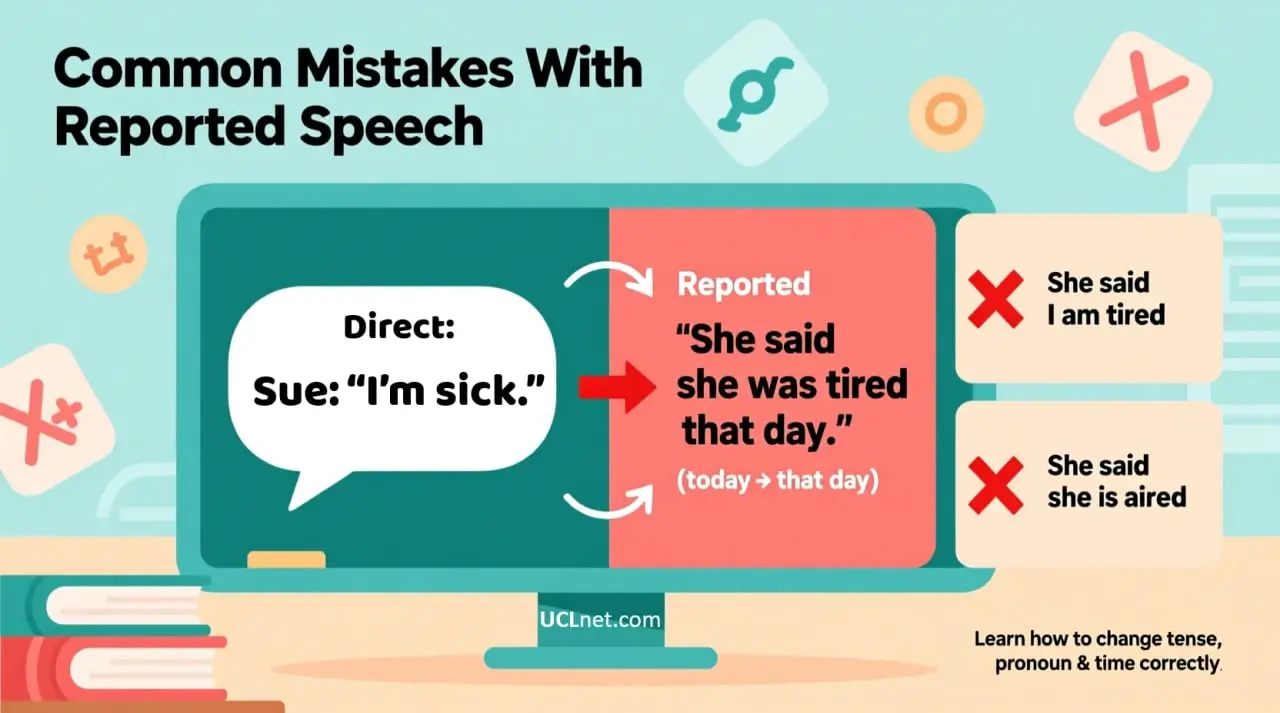
Mistake #1: Incorrect Verb Tense in Reported SpeechDirect: Sue said, “I’m sick.” × Indirect: Sue said that she is sick. ✓ Indirect: Sue said that she was sick. We don’t keep the present tense when reporting past speech. Instead, “am/is/are” → “was/were”. |
Mistake #2: Wrong Pronoun and TenseDirect: My mother said, “I’m satisfied with my new job.” × Indirect: My mother said that she is satisfied with his new job. ✓ Indirect: My mother said that she was satisfied with her new job. So remember: not only do we change the verb tense, but also adjust pronouns like “my” → “her”, “I” → “she”, etc. |
Mistake #3: Not Backshifting Future FormsDirect: Mr. President said, “He is going to cut the taxes soon.” × Indirect: Mr. president said that he is going to cut the taxes soon. ✓ Indirect: Mr. president said that he was going to cut the taxes soon. “Is going to” becomes “was going to” — because we move one step back in time. |
Mistake #4: Forgetting to Change Present SimpleDirect: My friend said, “We want to buy a new car.” × Indirect: My friend said that they want to buy a new car. ✓ Indirect: My friend said that they wanted to buy a new car. “Want” → “wanted” — always backshift in reported speech unless the situation is still true. |

When Should We Use Reported Speech?The mistakes discussed here are those related to changes needed when reporting speech indirectly. In other words, when we report what someone said, certain grammar rules must be followed. We need to go back one tense in time. For example, if the original sentence is in the present tense, we report it in the past tense. Other changes include updating pronouns and time references. You can see the most important ones in the chart below: |
Changes in Modal Verbs (In indirect speech)
Note: “Would,” “could,” “might,” “should,” and “ought to” won’t change in “indirect speech”. |
Changes in Time and Place Expressions
Tips: When reporting direct speech, don’t forget these time and place changes! |