👁 Views: 2,305
Bathroom Vocabulary for Kids: Fun Words and Bath-Time English 🛁🧽🚿
Introduction to Bathroom Vocabulary for Kids
Did you know that bath time can transform into one of the most natural classrooms when you teach bathroom vocabulary for kids? Therefore, instead of traditional studying, children can learn new English words effortlessly while washing their hands, brushing their teeth, or taking a warm bath. Furthermore, when parents and teachers introduce essential bath-time English phrases during everyday routines, young learners grasp languages much faster through real-life actions. Consequently, every time children hold soap, turn on the faucet, or wrap themselves in a fluffy towel, they connect the English word seamlessly with the real object.
Moreover, mastering daily hygiene terms helps boost everyday language skills through simple sentences and fun home activities. In addition, adults can guide young learners effortlessly without feeling stressed about complex grammar rules.
Why Teach Bathroom Vocabulary for Kids Daily?
The bathroom routine happens every single day, making it a reliable space for constant language reinforcement. Consequently, children absorb new terms much faster when they explore bathroom vocabulary for kids and practice active bath-time English. Furthermore, children benefit tremendously because they:
- Interact directly with real hygiene items and water fixtures.
- Hear repetitive bath instructions daily.
- Practice words in context immediately.
- Build healthy personal care habits alongside language skills.
- Gain confidence through simple daily routines.
Therefore, just a few minutes during morning brushing or evening bathing can lead to rapid vocabulary growth while you practice bath-time English.
Essential Bathroom Vocabulary for Kids and Daily Items
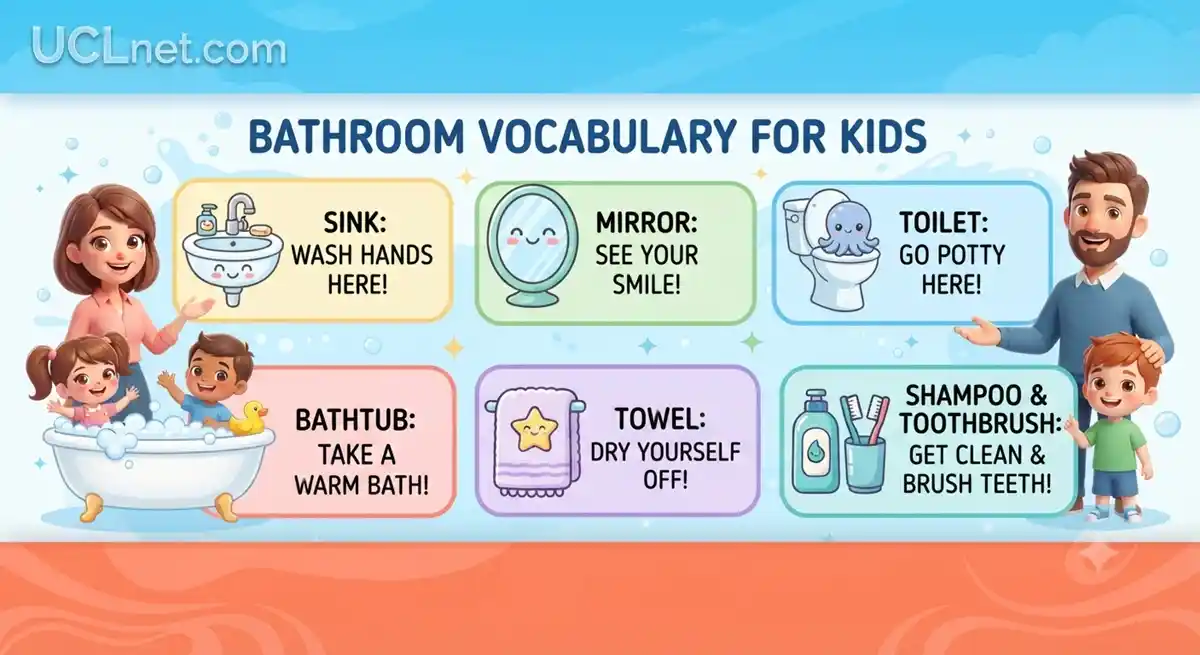
Here are the core bathroom words every young learner should master while exploring bathroom vocabulary for kids and practicing daily bath-time English. In addition, teachers and parents can review these terms with children daily.
Simple Hygiene Verbs to Practice Bath-Time English
Action words help kids express what they are doing while they learn bath-time English. Moreover, here is a complete guide combining verbs with real-life examples:
Consequently, using these action verbs regularly builds solid command of everyday English phrasing while you teach bathroom vocabulary for kids.
10 Essential Bathroom Commands for Kids
Therefore, giving these simple instructions during hygiene routines helps build listening comprehension successfully while you practice bath-time English. In addition, kids love following clear, short instructions:
- Wash your hands with soap.
- Brush your teeth thoroughly.
- Turn off the water faucet.
- Dry your face with a towel.
- Comb your tangled hair.
- Flush the toilet when finished.
- Put the toothbrush in the cup.
- Hang your wet towel up.
- Rinse the soap bubbles away.
- Keep the bathroom floor dry.
Short commands therefore enable children to connect auditory cues directly to physical personal care actions.
Short Parent-Child Bathroom Conversation Practice
Meanwhile, practicing this dialogue with your child during morning or bedtime routines reinforces bathroom vocabulary for kids effortlessly:
Parent: It is time to brush your teeth!
Child: Okay, where is my toothbrush?
Parent: It is near the sink next to the toothpaste.
Child: I found it! Should I put toothpaste on it?
Parent: Yes, just a small amount please.
Child: All done! My teeth feel very clean.
Parent: Excellent job practicing your daily hygiene!
Repeating conversations like this makes speaking English feel completely natural.
Bathroom Vocabulary Game and Scavenger Hunt
Find the Hygiene Items
Turn vocabulary practice into a game by playing a quick matching challenge. Furthermore, as you explore bathroom vocabulary for kids, ask your child to touch and name bathroom items as quickly as they can:
- Touch the soft towel!
- Point to the colorful toothbrush!
- Find the bar of soap!
- Touch the clean mirror!
Games keep children engaged and eager to learn more English words without stress.
Daily Activity Checklist for Kids
Therefore, can your child complete and check off these daily tasks while mastering bathroom vocabulary for kids?
- ☐ Brush teeth twice
- ☐ Wash hands with soap
- ☐ Take a warm bath
- ☐ Dry with a towel
- ☐ Comb hair neatly
- ☐ Turn off the faucet
- ☐ Flush the toilet
- ☐ Put items away
Track progress daily to build consistency.
Common Mistakes Children Make During Bath Time
Meanwhile, keep an eye out for these frequent mistakes when teaching bathroom vocabulary for kids:
Leaving Faucets Running
Children often forget to turn off water. Remind them to always turn off the faucet completely after washing hands.
Forgetting Action Verbs
Using nouns alone is common. Encourage full phrases like wash hands or brush teeth instead of single object names.
📝 Language Detective Worksheet Challenge
Worksheet & Classroom Practice Questions (70% Kids / 30% Teens)
Teachers and parents can use these sample questions directly with children as a practical exercise. Consequently, children can solve them interactively below while they practice bath-time English:
Answer Key (Spoiler Alert)
Click here to reveal the answer key
- Toothpaste
- In the mirror
- True
- False
- soap
- comb
- Brush
- True
- shampoo
- Because it helps you communicate during personal care routines
Vocabulary Review and Summary
The bathroom provides an amazing real-world environment for effortless English learning. Therefore, by pairing basic nouns like soap and towel with simple actions like wash and brush, children build strong language habits naturally.
In our next Daily Life Vocabulary lesson, we will explore English in the Bedroom, helping children master sleeping and resting words related to daily routines!
Parent’s Corner
Discover more daily learning guides and fun games to accelerate your child’s language journey at home!