

👁 Views: 2,395
Allude vs Elude: Meaning, Differences & Fun Quiz for Kids
What Is the Difference Between Allude and Elude?
Have you ever noticed how two words can sound almost identical while carrying completely separate actions in an English sentence? Naturally, when young students write stories or complete school assignments, they frequently encounter confusing homophones like allude vs elude that create spelling puzzles. Although these terms sound very similar when spoken out loud, they begin with different vowels and mean completely different things. Caring teachers and supportive parents always look for straightforward methods to guide children through tricky vocabulary without feeling overwhelmed. Therefore, this comprehensive guide provides clear definitions, smart memory tricks, fun dialogues, and an interactive quiz to make learning effortless. Consequently, mastering these spelling differences empowers every child to write and speak with complete confidence. Furthermore, exploring these language nuances early on helps students build a solid foundation for learning English vocabulary.
Specifically, knowing how to choose the right spelling stops you from mixing up hinting at something indirectly in a story with trying to dodge or escape from a pursuer!

Deep Dive Into Allude Meaning and Uses
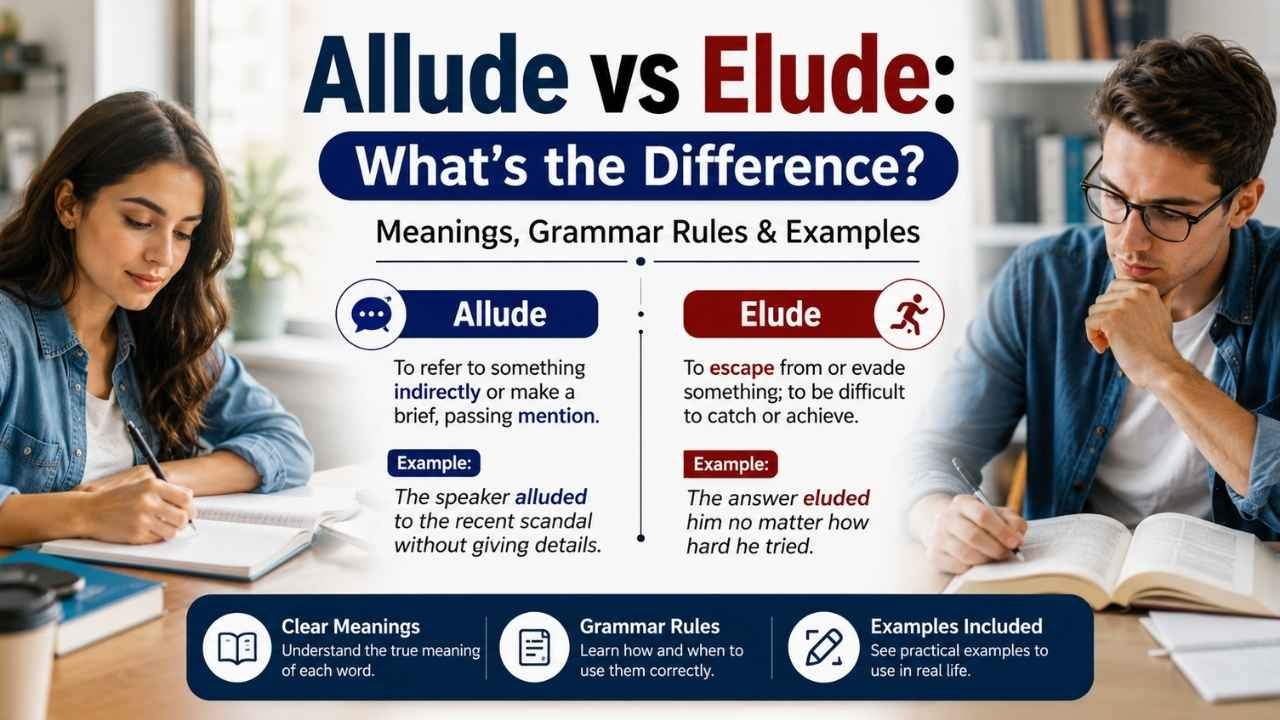
First of all, let us examine our first vocabulary term. What does allude mean? Pronounced as (/əˈlud/), it functions strictly as a verb meaning to suggest something indirectly or hint at a topic without naming it directly. Specifically, it is frequently followed by the preposition to in conversation or literature. Therefore, understanding this action word helps students describe indirect hints accurately in school stories. Furthermore, here are two key ways to understand its usage:
1. Suggesting Indirectly as a Verb
Meaning: To hint at something without stating it outright.
Example: Accordingly, Lucy cannot speak to her husband without alluding to his past mistakes.
2. Referring to Past Events
Meaning: Bringing up earlier experiences during a conversation.
Example: Similarly, she alluded to her previous job during the interview.
Exploring Elude Meaning and Escaping
Meanwhile, let us explore our second term. What does elude mean? Pronounced as (/ɪˈlud/), it functions as a verb meaning to dodge, escape, avoid, or slip away from someone or something. For example, when a clever thief slips away from pursuers or when a tricky math answer escapes your memory, it eludes you. Therefore, elude serves as an essential action word for describing escapes and missed goals. Consequently, learning this word helps young writers describe exciting chases with great precision. Moreover, practicing these action verbs daily expands conversational vocabulary.
Dodge or Escape
Meaning: To slip away from a pursuer or fail to be grasped by the mind.
Example: Specifically, serious relationships always seemed to elude him.
Quick Comparison: Allude vs. Elude
In short, to make these concepts crystal clear before taking our practice quiz, review this quick summary chart:
| Word | Core Meaning | Example Sentence |
|---|---|---|
| Allude | To suggest or refer indirectly (starts with A). | Lucy had to allude to the past event. |
| Elude | To escape, dodge, or slip away (starts with E). | Success always seemed to elude him. |
Teacher & Parent Guidance & Memory Tricks
Furthermore, parents and classroom teachers can use these smart tips during study time:
- Quick Memory Trick: Remind children that allude starts with ‘A’ (think: ask or about something indirectly). Meanwhile, elude starts with ‘E’ (think: escape or evade).
- Real-Life Error Correction: Students frequently write: “The thief tried to allude the police.” This sentence is incorrect because the thief is running away; the correct verb for escaping is elude.
- Interactive Role-Play: Have students practice dropping hints in a guessing game (allude) versus playing tag and dodging friends (elude).
Easy Everyday Dialogues for Kids
In addition to memorizing spelling rules, reading short dialogues aloud helps kids speak natural English. Try practicing these conversations with friends:
Dialogue 1:
Friend: “Did Lucy mention the secret directly during lunch?”
Student: “No, she tried to allude to it without naming names.”
Dialogue 2:
Ben: “Did you finally solve that difficult puzzle?”
Emma: “Not yet, the answer continues to elude my mind!”
Mini Dictionary for Young Learners
Before taking the interactive quiz below, please review these key vocabulary terms pulled directly from our lesson text:
| Word | Simple Meaning | Example Sentence |
|---|---|---|
| Indirectly | Without explicitly stating or making something plain. | She hinted indirectly at her upcoming birthday party. |
| Pursuer | A person or animal that chases someone else. | The clever fox hid from its hungry pursuer. |
| Evade | To escape or avoid something, especially by cleverness. | He managed to evade the difficult questions. |
| Grasp | To seize, hold, or understand completely. | The student finally grasped the complex science lesson. |
Practice Quiz: Allude vs. Elude
Therefore, check your understanding of allude vs elude by trying these ten practice questions:
Click here to show Answer Key
1. To suggest or refer indirectly to something
2. True
3. Indirectly
4. alluding
5. False
6. Serious relationships always seemed to elude him.
7. Pursuer
8. To prevent spelling errors and build writing confidence
9. elude
10. Grasp
Explore More Related Categories
Want to discover more English vocabulary lessons and confusing words? If so, explore our related categories below:


